Sykehouse Cottage

A beautiful C17th Holiday Cottage in the Lake District


Swill Basket Making in Broughton

swill1A swill is one of the most pleasing objects one could wish to possess.  It is a thing, complete and contained in itself, needing no explanation or props,  assured and possessed of a simple confidence – being both useful and beautiful.  As Ruskin said: ‘Nothing can be beautiful which is not true’ and a swill basket whispers “true” in a very lovely and understated way.

It is made from thin strips of woven oak and, so, is light and strong.  The closeness of the weave means that it is suitable for holding even very fine material. On the farm, these versatile baskets could be used for harvesting potatoes yet also for sowing seed. They were also used to carry coal or bobbins and, today, our family uses them as laundry baskets and, when there’s a baby, as a cradle.

The South Lakes was once a great centre for swill basket making. Bulmer’s Directory of Furness and Cartmel of 1910 showed a total of 13 swill-making shops in the area and, in Broughton, the focus of this industry was a cluster of buildings behind Cinder Hill, down by the park.

Today, there is just one man in the country who makes his living out of swill baskets. His name is Owen Jones and he lives at High Nibthwaite close to Coniston Water.  He was taught in 1988 by a retired ‘Swiller’ from Broughton called John Barker.  Owen runs workshops from his house and travels around the country attending fairs where you can see him making swills.  He has no trouble selling everything he makes.  If you would like further information about Owen and his work, click HERE for his own website.

There’s a swill in Sykehouse Cottage.  It is usually left on the stairs windowsill for guests to admire and use – if you’ve got any washing to hang out.  Carry your basket with one hand, the rim resting nicely on your hip bone.

Copper Mines Walk at Coniston

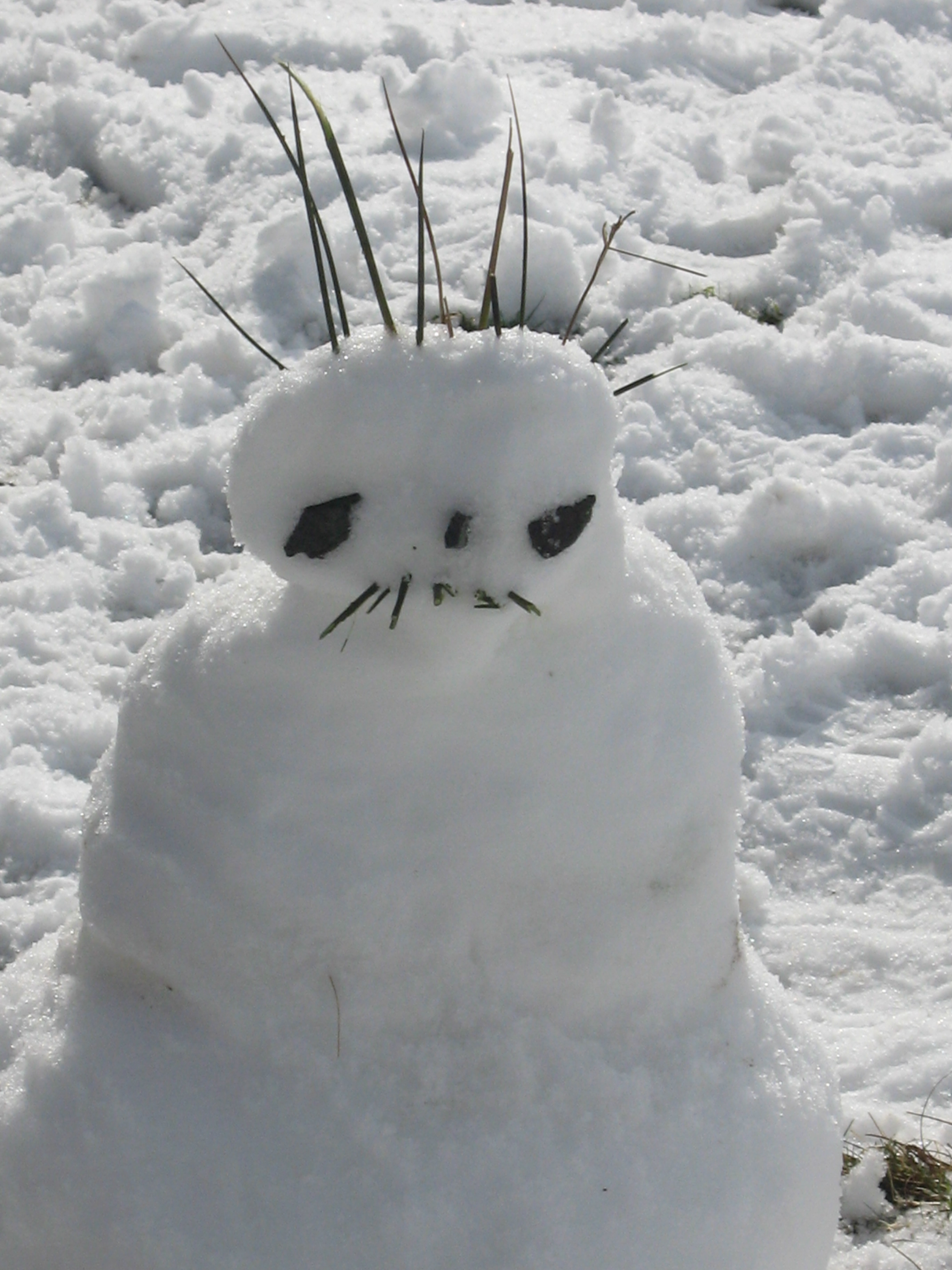
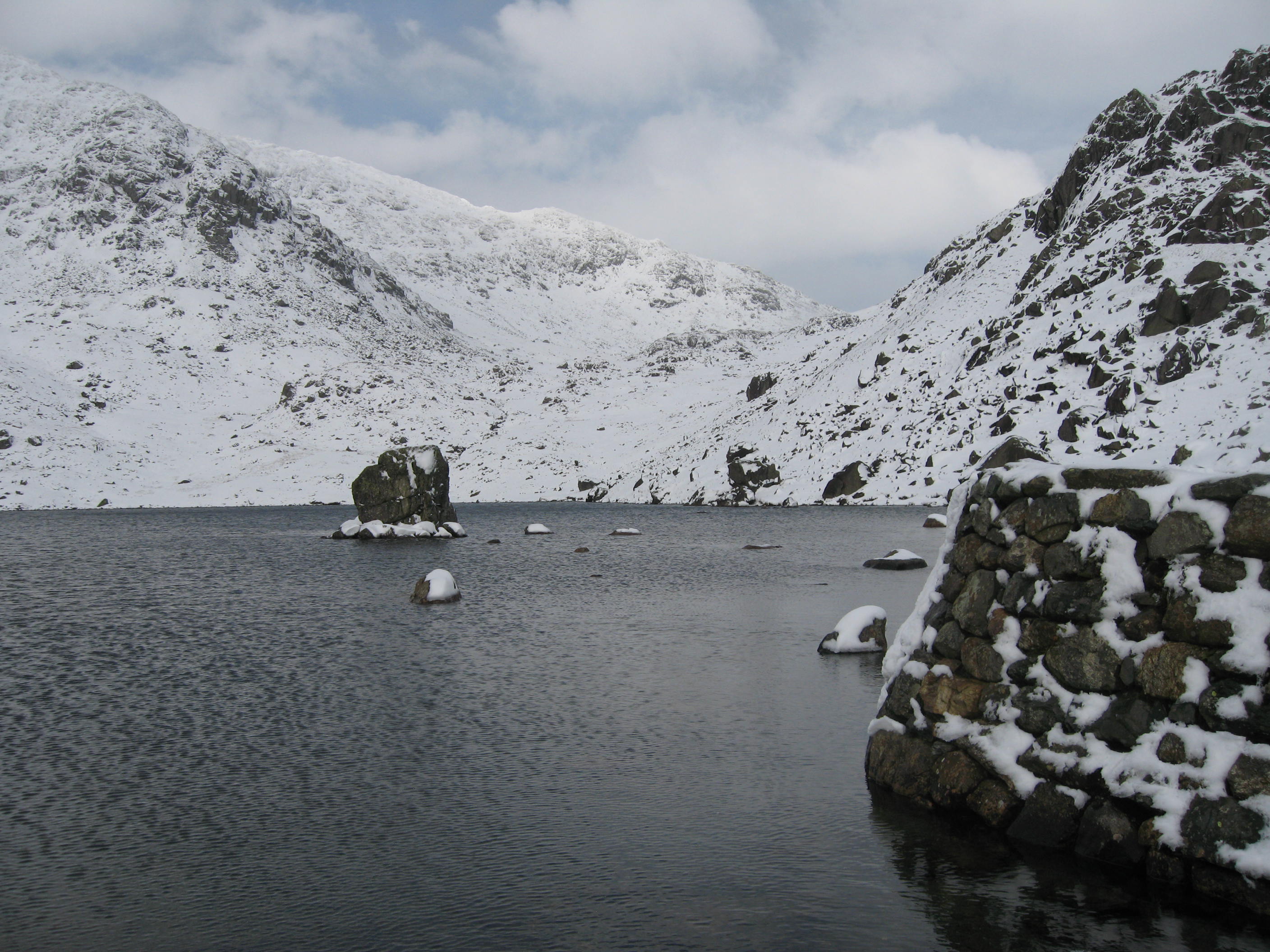
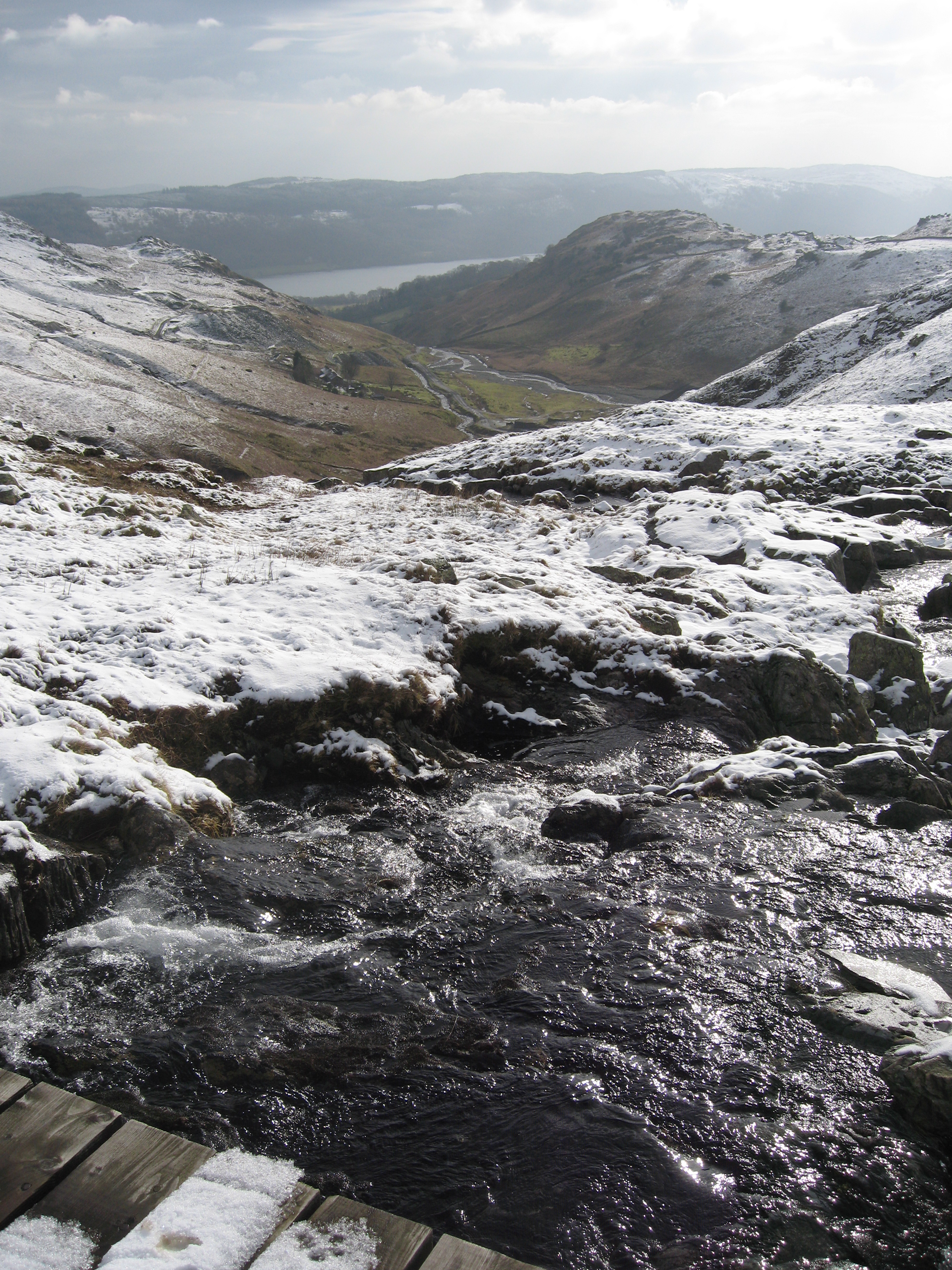
Miners BridgeIn February half term we took advantage of a bright, cold day to walk up Copper Mines Valley through the snow line to Levers Water behind Coniston.  As the valley has been worked for centuries, it’s an easy walk up well defined roads, including this beautiful Miners Bridge (left).  Past Irish Row and the Mine Captain’s House to the remains of the wheel house at Red Dell (right, slate tower on the right of the beck) Copper Mine Valley and Red Dellwhere we stopped for Kendal Mint cake and to make a scary snow man.  Red Dell SnowmanThen more of a sheep track through the snow up to Levers Water (right).Levers Water

Then back down again with a lovely view of Coniston Water at the end of the valley. Coniston from Copper MineWe stopped for chips at the very welcoming Sun Inn – barman provided free bread and butter when we mentioned chip butties!  The “One in the Waistcoat” had a pint of Bluebird (Coniston Brewing Co.) whilst I had half a Loweswater Gold (Cumbrian Legendary Ales).

The walk took 2 hours including stops with 3 children and a dog.  Remember to take a map!

This gallery contains 6 photos


1 Comment

Wordsworth’s The Westmorland Girl

In 1845, Wordsworth aged 75  wrote a poem to his grandchildren about a free spirited orphan girl who rescued a lamb from drowning:

“And the bleating mother’s Young-one, / Struggled with the flood in vain; / But, as chanced, a Cottage-maiden / (Ten years scarcely had she told) / Seeing, plunged into the torrent, / Clasped the Lamb and kept her hold.”

And, taking this one incident, the old man then inflated her brave and dramatic gesture to more lofty and inspiring heights for the younger members of his family:

“Watchful as a wheeling eagle, / Constant as a soaring lark, / Should the country need a heroine, / She might prove our Maid of Arc.”

This “Maid of Arc”, Sarah Davies, came to live in Broughton-in-Furness. She was buried in an unmarked grave on 4th September 1872 aged 37, a week after giving birth to a baby boy.

According to HV Koop who wrote a history of the town, a wreath was laid on her grave at the Wordsworth Centenary in 1950 and our local historian, Wal Greenhalgh, did much sleuthing to verify the facts.  A Sarah Mackereth was born in Grasmere in 1834 (or 5) and she married Samuel Davies in 1867.  The family moved to Broughton after the census of 1871 and in a town directory of 1876 there’s an entry for Samuel Davis as the farm bailiff at Eccleriggs.

When I contacted the staff at Wordworth Trust, they were delighted with this nugget of Wordsworthalia and Rebecca Turner, the Assistant Curator, added a little extra information from their collections:  in a letter of 1834, Wordsworth writes: “The little Poem which I ventured to send you lately I thought might interest you on account of the fact as exhibiting what sort of characters our mountains breed. It is truth to the Letter”. 

Fabulous! … what sort of characters our mountains breed”.

How did they know where to lay the wreath?

According to Wal Greenhalgh, the Vicar of the time wrote in the margin of the Parish Register: “Wordsworth’s Westmorland Girl” next to her name and, with great good fortune, the Barrow Record Office holds the Sexton’s notebook which details: “interred between Hancock’s tombstone of Myreside and William Fleming’s tombstone.”westmorland girl

If you would like to go and pay your respects in St Mary Magdalene’s churchyard, follow these instructions: from the South east corner of the church walk, at right angles to the church, into the graves (minding the crocuses and snowdrops!).  As you walk, keep looking to you right, soon as you come parallel to a sundial monument some graves away and half hidden by a tree, you’re at the spot. Find Jacob Knight’s tombstone (pictured), which is between Hancock’s and Fleming’s grave, and her unmarked grave is there, roughly under Jacob Knight’s.

If you would read another post about Wordsworth : Dorothy’s Daffodils :  click here.