Sykehouse Cottage

A beautiful C17th Holiday Cottage in the Lake District


Birk’s Bridge to the Newfield Inn

Hard Knott We started at the NT car park just above the beautiful Hobbit-like Birk’s Bridge and headed into the forestry land, marked on the OS map as Dunnerdale Forest and by the Forestry Signs as Hardknott Forest.  Much of the wood that was described by Wainwright as “young plantations” has now been cleared and neatly stacked up making for a rather beautiful, if working, landscape.  The Commission is now replanting the forest as a mixed deciduous rather than the stark fir crop to reflect the changing purposes of these fells. 

We used the level forestry roads rather than the narrower public footpaths as they are lovely for chatting whilst walking.  IMG_8561Good progress was made across the forest to Grassguards Farm with its little concreted ford.  Here we picked up the Grassguards Gill bridleway down into the beautiful gnarled trees and river walks around Wallowbarrow.   Here, we took the opportunity to lob some rather large stones in the river before retiring to the Newfield for half pints of CatNap and something-and-chips. WallowBarrow
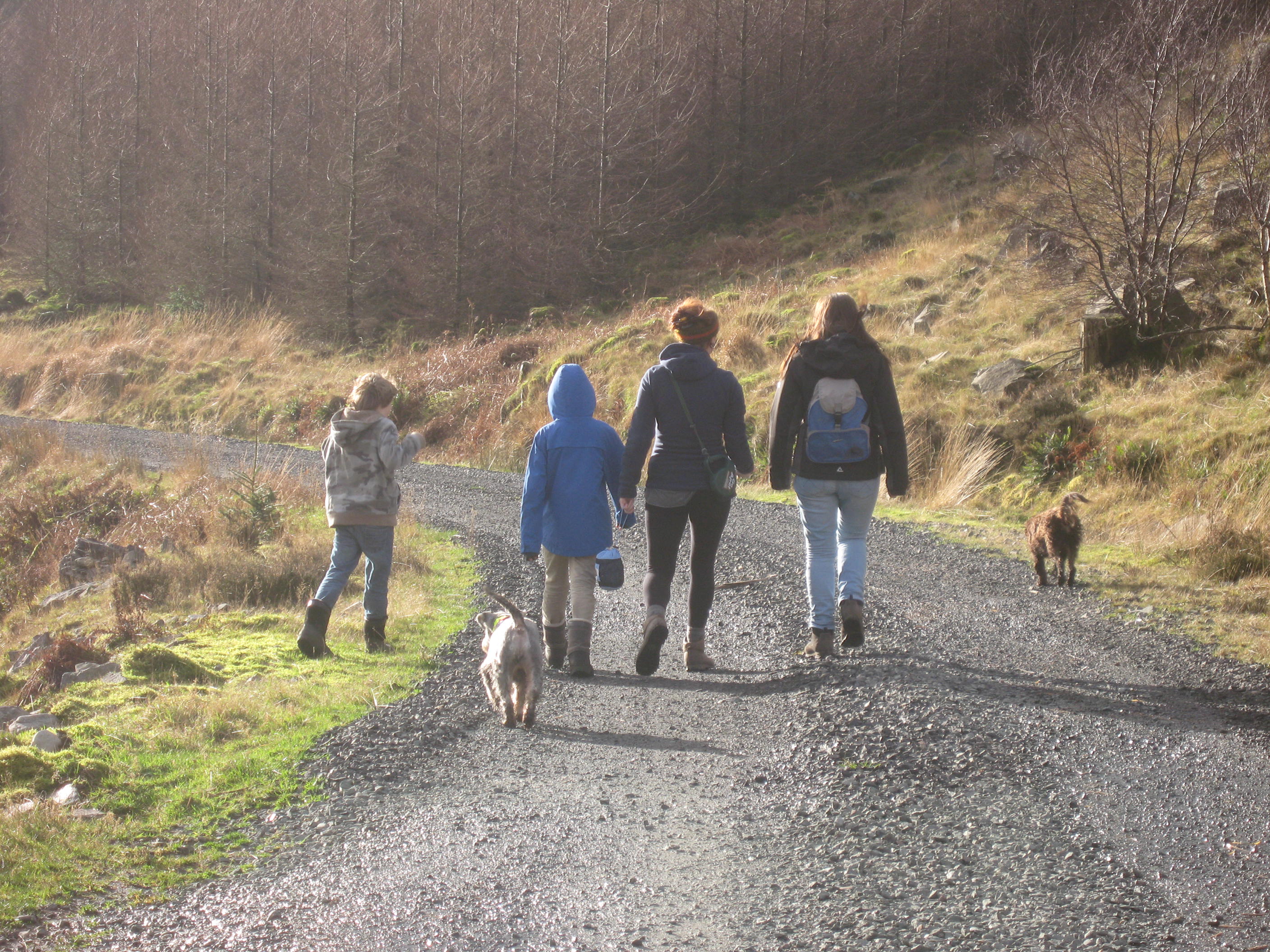
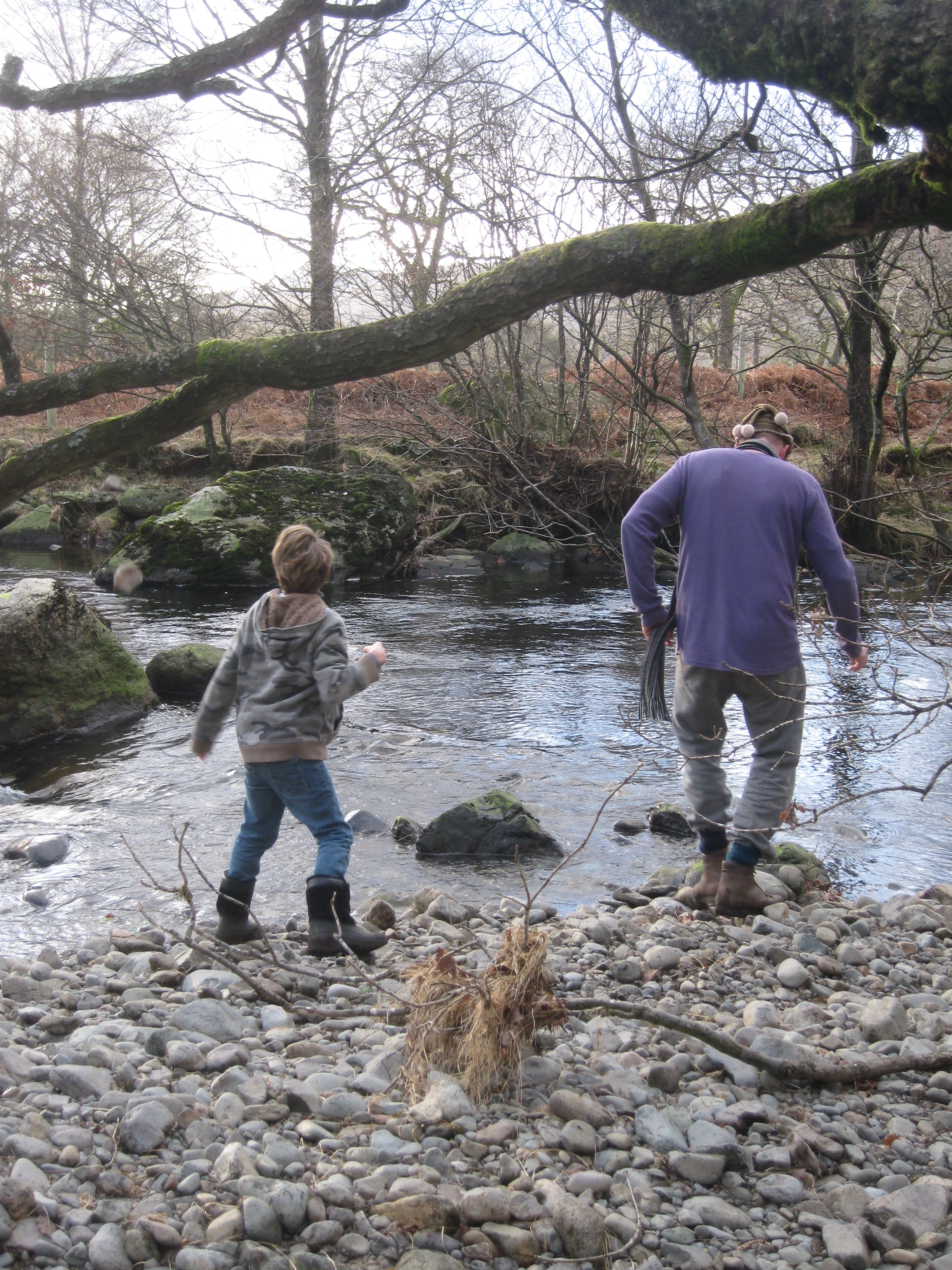
The walk took one hour 40 minutes and we were helped by another member of the family was waiting to provide a lift to retrieve cars rather than having to walk back after a rather heavy meal!

Wainwright’s Fourth Volume: “Heaven fallen upon the earth”

IMG_8252In the Personal Notes at the end of his Fourth Volume on the Southern Fells, Wainwright noted that “there had been a clamour for Book Four ever since the first in the series appeared” because these fells “just happen to be a bit of heaven fallen upon the earth.”

This orange striped volume is the one we use the most and it is dedicated to: “the hardiest of all fell walkers, The Sheep of Lakeland, the truest lovers of the mountains, their natural homes and providers of their food and shelter” … and, sheep like, the chapters scramble up and down the thirty fells of the Southern Lakes from Scafell Pike to Holme Fell.  He includes the direct route to Coniston Old Man: “this is the way the crowds go”; plus the one via Boo Tarn: “a climb for … the discerning walker” and one ascent from Torver with its view of Dow Crag, “one of the grandest rock-faces in the district”.

We hope you enjoy planning your walks!

For further information about Alfred Wainwright, please follow this link to the Wainwright Society.


Muncaster Castle – a family run experience …

Muncaster CastleAfter enduring many “experiences” of an expensive and very themed nature in days out with the Rigg tribe, a trip to Muncaster Castle is always a delight. There are no expensive photo opportunities to catch the unwary, nor an exit-through-big-gift-shop policy.  The castle has a charmingly individualistic audio tour written and read by the family which makes a refreshing change from an actor reading from carefully nuanced script.

They highlight family favourites: “I always point out the ships’ anchors and the date 1588 on the fireback!” barks the owner.  “Never forget the Armada lost some ships on this coast!”

Family losers:“This portrait is of the one we call the Drip.” “Here’s a family portrait and can you see how two of the sons’ heads are pasted in? They must have been the ones he wasn’t talking to.”

And apologies for not opening more rooms on account of the mess: “Sorry, you’re not allowed into my dressing room. We all need a door to throw our pyjamas behind!”.

I only paraphrase slightly.

Muncaster Castle is an truly original day out and 12 only miles from Sykehouse Cottage.  It would be a shame to miss it if you are in the area.


Stott Park Bobbin Mill

Stott_Park_Bobbin_Mill_Steam_EngineThis is a fascinating mill run by English Heritage.  They fire up the Victorian Steam Engine the first weekend of every month and bank holidays from April through September (they are open from April til the end of the October half term) and there are family friendly guided tours around the mill.

It’s small, personable and even I can understand what most of the moving parts are doing!  You can really get a sense of what it must have been like for the 250 men and boys who churned out a 1/4 million bobbins a week – wading through waist deep discarded shavings to keep warm in the winter.  And it’s a great way to inspire budding engineers – or potential industrial historians!

Stott Park Bobbin Mill is about a 1/2 hour drive from the holiday cottage, just north of Newby Bridge.  For more details click here for the English Heritage website.


Hardknott Fort

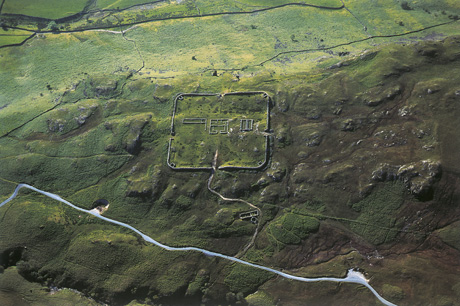
Hardknott Roman FortHardknott Fort, at the western end of Hardknott Pass, is one of the most remote and dramatically sited Roman forts in Britain and is well worth the 30 minute drive from Sykehouse Cottage for a look around and to marvel at the sheer tenacity of the Romans. Though I must point out that the road up to it is single track and that reversing skills may be needed if you meet another car!

The stronghold was built early 2AD and an inscription says that the garrison was the 4th Cohort of Dalmatians, all the way from the Balkans.  It was abandoned in the 3rd century and the stone was pilfered over a long period.  However there is still enough to see the outlines of central buildings: the headquarters, a small temple and the commander’s residence.  Also the remains of a bath house alongside the road leading up to the fort.  We find it incredibly atmospheric and, as one of the tribe is a budding gladiator, it’s a perfect place to sit and imagine life 2000 years ago and perhaps  … for a leisurely picnic!

It is an English Heritage site and further details can be found following this link.


Muncaster Castle

Muncaster CastleMuncaster Castle is a great day out for families and a favourite of ours; it’s about 30 minutes drive from the holiday cottage.  There’s a very well presented Owl Centre which is the HQ of the World Owl Trust and also is a breeding centre for rare species. The Centre has daily displays of the birds which enthrals the smaller members of our tribe.

When we get bored of staring at the owls, the vast grounds are lovely for the children to run through, a good sized playground, café, and there’s the deliciously scary (for under10s) Meadow Vole Maze where one experiences life as a vole with gigantic predators about!

Here’s their website if you want a closer look.


Ravenglass & Eskdale Railway

RavenglassA great day out from Sykehouse Cottage – especially if you have children – is the Ravenglass & Eskdale Railway. It’s a 30 minute drive up to A595 and we sometimes include Muncaster Castle for a very full day out.

Built in 1875, it is the Lake District’s oldest and longest narrow gauge steam railway and known locally as La’al Ratty or The Ratty.  Its original purpose was to ferry iron ore from workings at Boot down the valley to Whitehaven Iron Mines Ltd. The narrow gauge railway provides a lovely 7 mile journey, through some of the Lakes prettiest scenery, from the coast up into the Fells.  There are good, easy walks from many of the stops and, at Ravenglass, there is  a small railway museum and café.  They often have special events for holiday weekends.  For more information click here for their website.


Samuel Whiskers at Hill Top Farm

Tom KittenI have read all the Beatrix Potter stories to the children at bedtime.  Some more often than others.  Certain tales were as delightful and easy to read as well paced poems (Jeremy Fisher); others were a vicious, verbal obstacle course for a very tired reader to stumble over and I used to hide them behind other books (The Pie and the Patty Pan, anyone?)  So the boys and I absolutely charmed when we visited Potter’s Hill Top Farm run by the National Trust for, instead of a worthy guide book, we were given copies of “The Tale of Samuel Whiskers”.  (This was the boys’ favourite though I found Tom Kitten’s close shave quite unnerving.)  We were instructed to search the house for the exact places Potter had drawn for the book.  Well done the National Trust for thinking of such a thing!  The boys were entranced to find the VERY skirting board, the stairs etc from her watercolours and trace the story of the enormous, old, thieving rat, and the ever resourceful Maria, around the house.

Be warned Hill Top Farm is extremely popular and entry is by timed ticket only.  Allow plenty of time of park – because there’s not much of it and it’s a walk from the site.  Click here for the official site.


Tarn Hows

Tarn HowsTarn Hows is another favourite walk of ours – particularly when we have friends with pushchairs or just want to “walk and talk” instead of concentrating on finding the next sheep track, as it’s a stunningly pretty round walk on smooth paths with plenty of benches along the way.  The place is owned by the National Trust, has a well managed car park – and possibly an ice cream van in high season.  They even have a couple of those nifty Tramper scooters giving people who are less mobile a chance to roam a little.  So, if you are staying at Sykehouse Cottage and fancy a stroll rather than a hike, Tarn Hows is the place for you.  It’s only 25 minutes from Broughton in Furness, past Coniston Water.

For all its natural beauty, the tarn is artificial.  It was created in the mid C19th by the owner out of three much smaller, boggier pools.  He also landscaped the area, building the footpaths and planting the magnificent, non-native trees such as the Giant Sequoia which give the place a rather Scottish feel.  Tarn Hows was designated a Site of Special Scientific Interest in 1965 with red squirrels, Herdwick sheep, both red and roe deer and Daubenton’s (or water) bats living in the area.

Tarn Hows is open dawn to dusk all year round.  Further details can be found on the National Trust website here.


Grizedale Forest Sculpture Trail

The immense satisfaction of finding something unexpected, yet wholly delightful, amongst trees has to be hot wired into the most grizedale woodsmanprimitive part of our brains.

Rambling around Grizedale Forest looking for sculpture is one of our favourite days out.  The tribe can run about to their heart’s content (waving sticks, climbing over logs and jumping out shouting BOO!), whilst I stand still and contemplate art, and it’s only half an hour’s drive from the cottage in Broughton-in-Furness.

Grizedale has the largest outdoor collection of site-specific art in the UK.  Created over 30 years, it holds about 50 permanent pieces but nobody’s quite sure how many as some, inevitably, have rotted away.  Last month, two new sculptures were added to the collection.  “Concrete Country” by Lucy Tomlins is an out-sized concrete country stile and “Romeo” by Owen Bullet & Rupert Ackroyd is a carved oak totem.  This was inspired by the story of Romeo, an urban fox who explored the Shard tower in London.

Grizedale Forest also hosts temporary exhibitions and events, please check out their website to find out what’s on.