Sykehouse Cottage

A beautiful C17th Holiday Cottage in the Lake District


Grizedale Forest Sculpture Trail

The immense satisfaction of finding something unexpected, yet wholly delightful, amongst trees has to be hot wired into the most grizedale woodsmanprimitive part of our brains.

Rambling around Grizedale Forest looking for sculpture is one of our favourite days out.  The tribe can run about to their heart’s content (waving sticks, climbing over logs and jumping out shouting BOO!), whilst I stand still and contemplate art, and it’s only half an hour’s drive from the cottage in Broughton-in-Furness.

Grizedale has the largest outdoor collection of site-specific art in the UK.  Created over 30 years, it holds about 50 permanent pieces but nobody’s quite sure how many as some, inevitably, have rotted away.  Last month, two new sculptures were added to the collection.  “Concrete Country” by Lucy Tomlins is an out-sized concrete country stile and “Romeo” by Owen Bullet & Rupert Ackroyd is a carved oak totem.  This was inspired by the story of Romeo, an urban fox who explored the Shard tower in London.

Grizedale Forest also hosts temporary exhibitions and events, please check out their website to find out what’s on.


Museums at Night Festival 2013

2013 Museums at NightThere is something deliciously exciting about being somewhere you are not normally allowed – especially at night.  Here in the South Lakes there are some fun things to do over the 16 – 18th May as part of the national Museums at Night Festival.

‘a greeting of good ale’ 16 May 7.30-9.00 £4 Dove Cottage. Wordsworth is famously known as the “simple water-drinking bard”, but the archives tell a different story.  Discover more about the history of Dove Cottage, formerly the Dove and Olive-Bough Inn,  and enjoy a free beer and food tasting.   Further details at The Wordsworth Trust website here.

Arts & Crime, Murder at Blackwell 16 May at 5.30, 6.30, 7.30, 8.30. Free but limited to 15 so booking essential.  You’ve mistakenly entered the end of a dinner party in the 1920s: what has happened and is someone still ‘at large’? Let the theatre company, Bear Necessities, lead you through Blackwell in search of the culprit.  Further details at the Blackwell website here.

Dozing at Dove Cottage 17 May & Secret Sleepover 18 – 19 May Dove Cottage  Dozing at Dove Cottage, for 14+, will be an eventful evening of activities exploring the cottage, a bite to eat, and a movie marathon followed by the sleepover.  Listen to some ghostly tales on the torch-lit trail and enjoy twilight arts & crafts activities before setting up camp in the museum for the night!  The Secret Sleepover is for children aged 7 – 13 years old, but adults will enjoy it too – a minimum of 1 adult for every 5 children. £10 pp includes breakfast, accommodation and materials for activities. Further details at The Wordsworth Trust website here.

Cranium Sculptorades at Abbot Hall 18 May From 6.00pm, games start after 7 until 10.  Free event, just turn up on the night!  Why stay in and play board games when the Lakeland Arts Trust team is challenging teams of visitors to a giant game of Cranium Sculptorades? Further details at the Abbot Hall website here.


Duddon Iron Furnace

duddon valley blast furnaceThe restored remains of Duddon Iron Works are the most complete surviving example of  a charcoal-fired blast furnace in the country and, happily for us, are just past the Duddon Bridge outside Broughton in Furness.  It’s such a beautiful building, in a lovely setting and I marvel at the ingenuity and elegance of the Works.

In the 18th Century, blast furnaces revolutionised the way iron ore could be processed. Large furnaces were built using water power to drive bellows which could pump air into the combustion chamber to create an intense heat.  The water wheel is missing but the course of the leat (or stream) has been traced, bringing water from the river half a mile away. Higher up the hill is the charcoal store, 100 feet in length, and as high as a church.

Duddon Ironworks was established in 1736 and operated until 1866, smelting iron ore bought in by boat from Millom.  Pig iron cast here was sent down to Chepstow and Bristol where it was used in the manufacture of anchors, chains and other iron work for ships.  It’s called “pig iron” because the molten metal ran out at the base of the furnace into sand moulded into a branching structure of one central runner and lots of little ingots which looked rather like a litter of piglets suckling on a sow.

The buildings are in the care of the Lake District National Park. At the site, this information panel (right) gives a description of the various parts of the furnace and, in the drawing, you can see the ingots laid out.Duddon Iron Works

If you take the road out of Broughton, past the High Cross, towards Millom (A595), immediately after the bridge, turn right and the furnace is a short way along on the left and can be seen from the road.


George Romney : The Gower Family Portrait

Gower Family George RomneyAbbots Hall in Kendal is a hard working and welcoming museum.  By that I mean it really makes the most of what it has got and attracts good touring exhibitions to grace its top floor.  It has one permanent star artist, George Romney (1734-1802), who was born in Dalton-in-Furness and trained under a portrait painter named Christopher Steele in Kendal before moving to London. George’s masterpiece: The Gower Family: The Children of Granville, 2nd Earl Gower, (c 1776-7) is in Abbots Hall.  This huge (203 x235cm) group portrait shows the older half sister, Anne, shaking her tambourine (on the right). The younger children dancing in a circle are his son and daughters from a third marriage.  Yes, that’s a son staring directly at us from behind the middle dancing girl – not yet “breeched” as he is still in a dress. From left to right: Georgina, Susan, Granville and Charlotte Sophia. Romney had recently visited Italy and this work shows his up-to-the-minute interest in classical themes and poses with the dancing “Arcadian” children and antique column behind. Close up, the faces are wonderfully vivid portraits, full of character and life, however Granville’s body and arm don’t match the tilt of his head and the body is curiously unfinished compared to the rest of the family.  I was guessing the children only sat for head portraits and maybe some full body sketches and that the details were added in at leisure.  Was it finished off by an inept apprentice?  Or was the patron impatient? Perhaps this background was considered unimportant? Or was it just a small fidgety boy?

I contacted the very helpful Romney Society and their Research Fellow, Alex Kidson, said that probably Granville was a late addition to the composition; his parents may have originally thought that at three years old he was too young to sit.

In his early 30s, Granville was painted again by another renowned artist, Thomas Lawrence, during his time as British Ambassador to Russia.  This time he stood still.  Thomas Lawrence Granville Gower

If you would like to visit Abbots Hall and need more information, here’s their website.


Wallowbarrow Round Walk

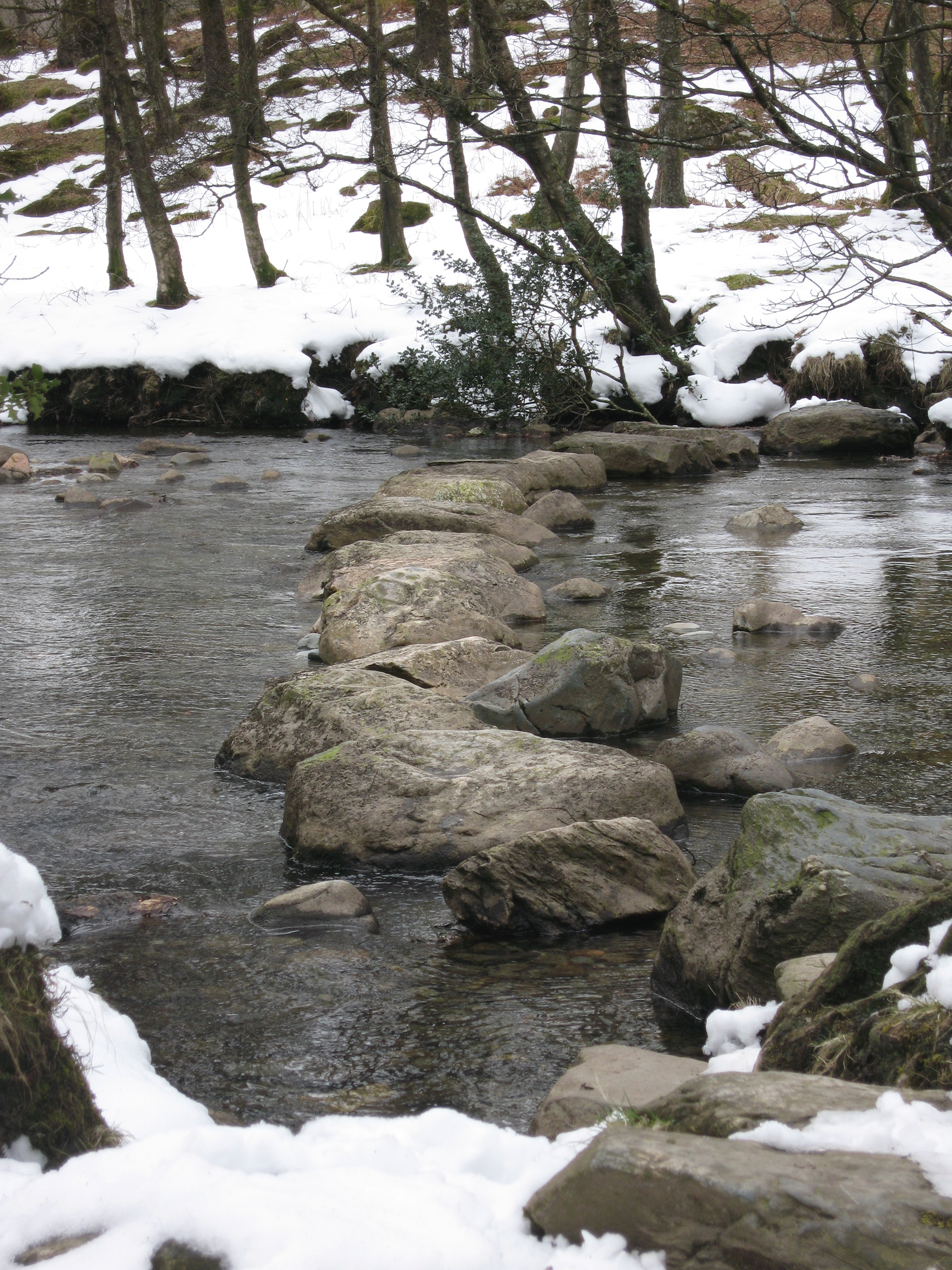
Stepping Stones across the DuddonAt Easter, we tramped through the snow around Wallowbarrow.  This is one of our very favourite walks: a beautiful, quiet river and woodland walk along the Duddon in National Trust land.   It can be as long or as short as you want and has the added bonus of starting/ending at the wonderful Newfield Inn.

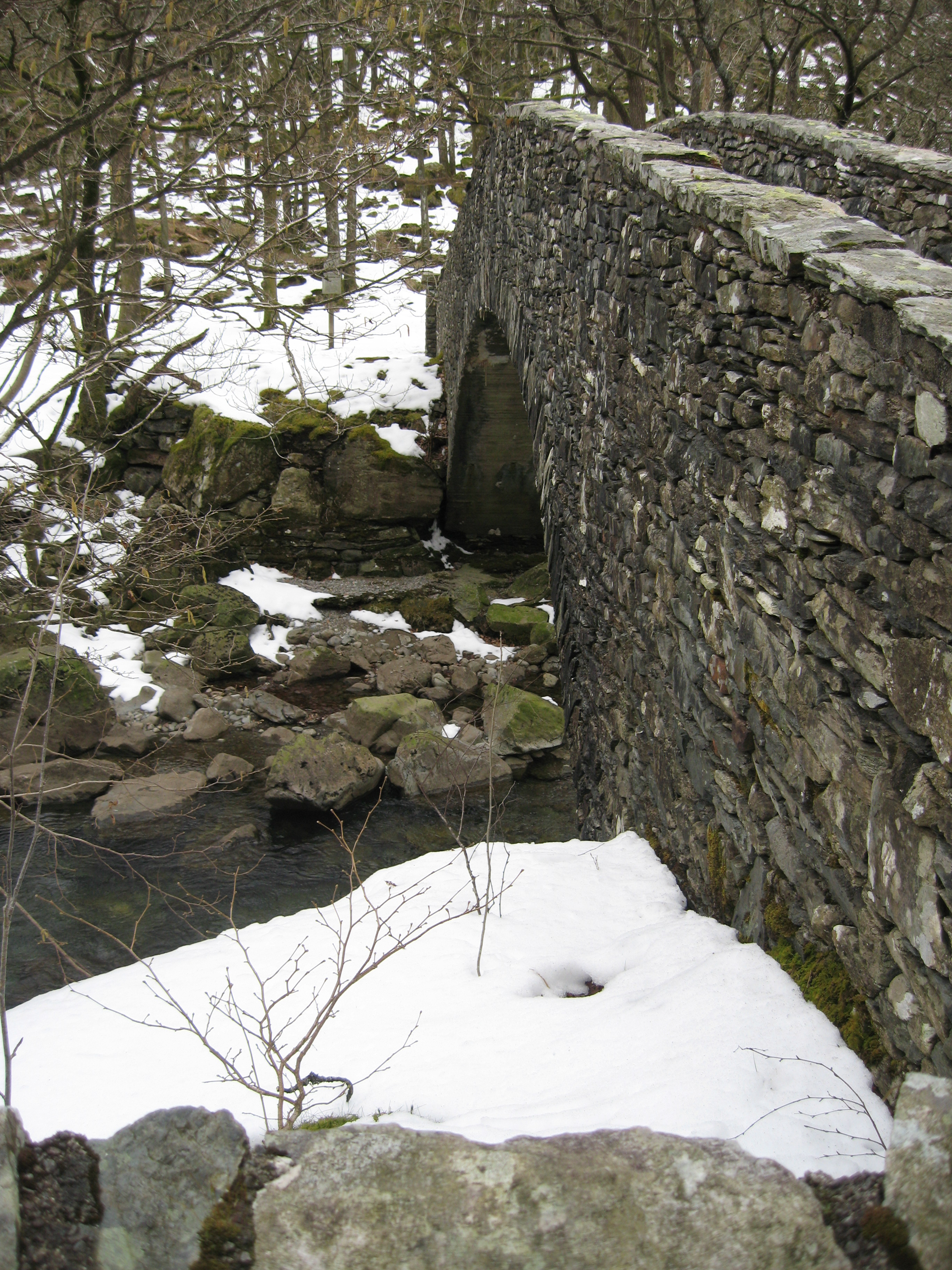
In the Summer, we often picnic on a river beach and sometimes even take a dip at Watersmeet where the Tarn Beck meets the river Duddon.  But today we were just grateful that someone had been around before us to tamp down the snow – which in places was higher than our wellies!Memorial Bridge

CawWe wandered about for an hour and finished with lunch at the Newfield.  Run by Paul, this c17th inn at Seathwaite has great, hearty food for walkers, a log fire and a fine selection of local beer.  This lunchtime we ate their famous steak pie and Cumberland sausage and sampled Barngates’ Catnap and Cumberland’s Corby Ale.  Click here for their website.


1 Comment

Donald Campbell : A Very Small Personal Encounter

Donald Campbell

Bill was in the Sun Hotel, Coniston, with his Granny in late December 1966 when he met Donald Campbell who was practising for his final, and unfortunately fatal, water speed record attempt on Coniston Water.

As a very small boy, Bill vividly remembers Campbell surrounded by friends in the hotel’s corridor, bending down to ask him : “Do you like cars?”  Bill said, “No.”  “Do you like boats?” “No.”  “Do you like chocolate?”  “Yes!”  This raised a big laugh from Campbell and his friends, and the man gave him a Mars bar – a huge prize for a small boy with such an unyielding attitude!

Coniston is only 9 miles and 15 minutes drive away from Sykehouse Cottage.  The Ruskin Museum in Yewdale Road has a new wing with many interesting photographs and displays of memorabilia about the Campbell family, the Bluebird and the Record Attempt.

If you want to read my post about the Ruskin Museum, click here.  Alternatively the link to the Museum’s quirky website for opening times and more information is here.


Thomas the Tank Engine and The Island of Sodor

Isle of Sodor 1958 map

The Rev W Awdry, the inventor of the Thomas the Tank Engine, was asked his readers where the stories took place.  Well, his first books took place entirely in his imagination so he was a little stuck for an answer.  Whilst on holiday on the Isle of Man, he discovered that the local bishop there had the title “Bishop of Sodor and Man”. (Sodor relates to the Southern Hebrides.)  Rev W Awdry liked the name and invented the fictional Isle of Sodor, located between the Isle of Man and Walney Island, just off the Furness peninsular.  This map from 1958 shows this railway Atlantis, some five times the size of the Isle of Man, with Barrow, Ulverston and Millom all shown on the mainland.  Later the Isle of Sodor was modified to incorporate Walney Island.

Many stories in his books were based on real events from the South Lakes: “Gordon the Big Engine” includes a Thomas adventure called “Down the Mine” and is based on an incident when an engine fell down a deep hole at Lindal-in-Furness in 1892; Edward was probably based on the4-4-0 K2 Large Seagull class introduced on the Furness Railway in 1896; Boco was based on the BR Metropolitan Vickers diesel electric type 2 locomotive introduced in 1958, which worked mainly in the Barrow area; and several stories are also based on the nearby Ravenglass & Esdale Railway (La’al Ratty) which the Rev W Awdry visited a number of times.

Thomas often visits the Lakeside & Haverthwaite Railway (about 20 minutes drive East from Sykehouse Cottage).  Follow this link for more information.

You can find out opening times and train fares for the La’al Ratty here.


The Duddon Mosses

© Natural England copyright 2013

Rather than going up, how about going along for a change?  Sometimes the South Lakes is so dominated by the Fells, we forget about the Estuary and looking out to sea.  The Duddon Mosses is a lowland raised peatbog just south of Broughton in Furness near the village of Foxfield.  It is one of the most important example of this type of peatbog in Britain.  Accessed via a series of boardwalks and clearly signposted, a stroll across the Mosses is a lovely contrast to climbing up and then scrambling down. (Again.)

There are information panels in Broughton Square and at Foxfield Station giving detail about the Mosses and describing a circular walk.

Here are bog plants such as Sphagnum moss, cotton grasses, bog rosemary, cranberry and the spookily carnivorous sundew.   In late spring and early summer, the fluffy heads of cotton grasses and yellow bog asphodel provide a delightful show.  There are plenty of insects and you may spot butterflies and moths as well as crickets, damselflies and dragonflies.  The Mosses are a haven for deer, adders, lizards and frogs.  Barn owls hunt over the Mosses at dusk and the temporary pools created as a result of restoration works are frequented by water birds such as teal and heron.

Steve Benn, the local Natural England officer, would like me to remind people to keep all dogs on a short lead between 1st March and 31st July when walking on the Duddon Mosses to protect the ground nesting birds during the breeding season.

And, of course, after all that fresh air, you could always stop by at the Prince of Wales in Foxfield, renowned for its selection of real ale, on your way home …

For a more detailed walking guide and map follow this link to the Natural England website.

Copper Mines Walk at Coniston

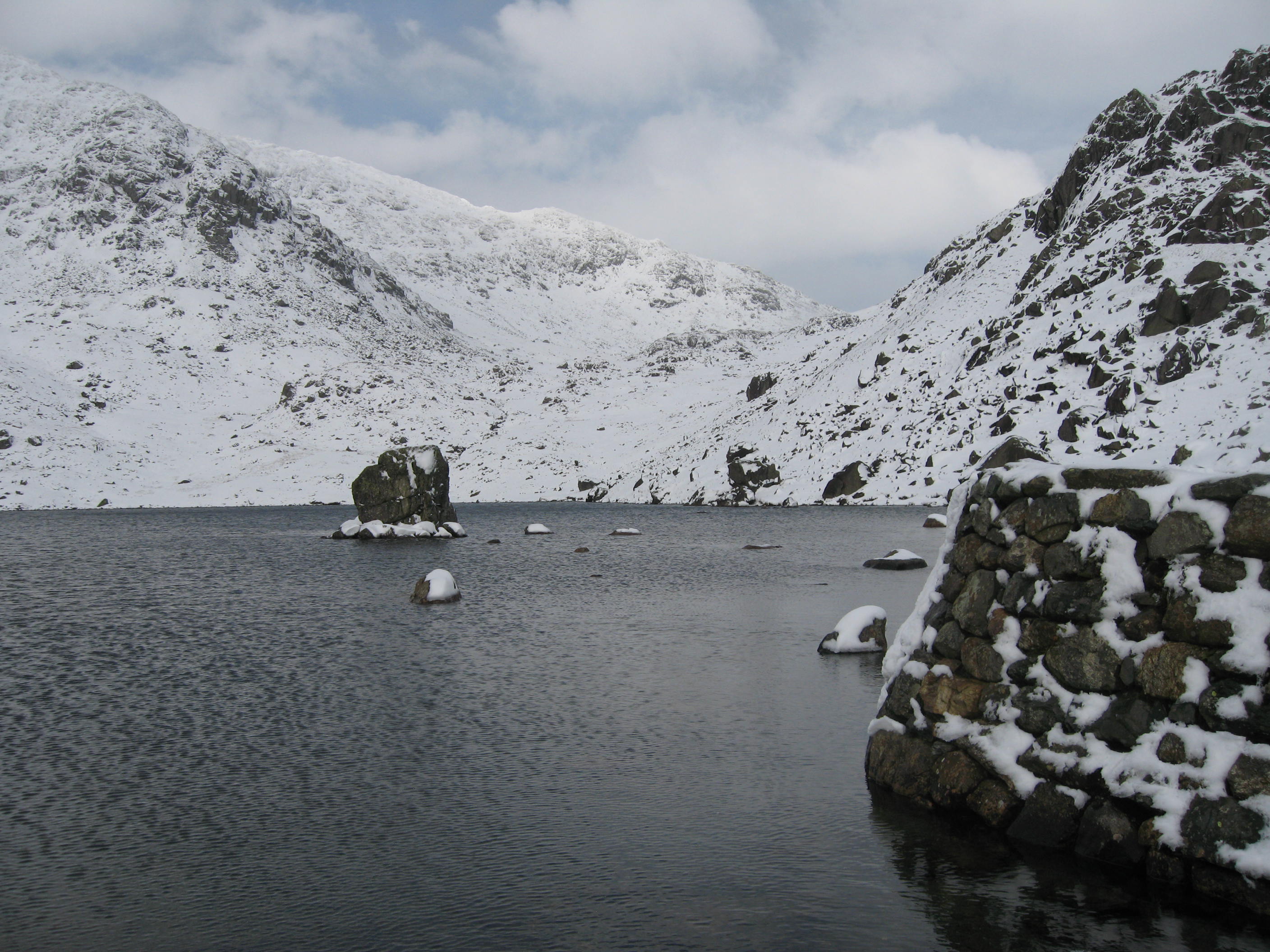
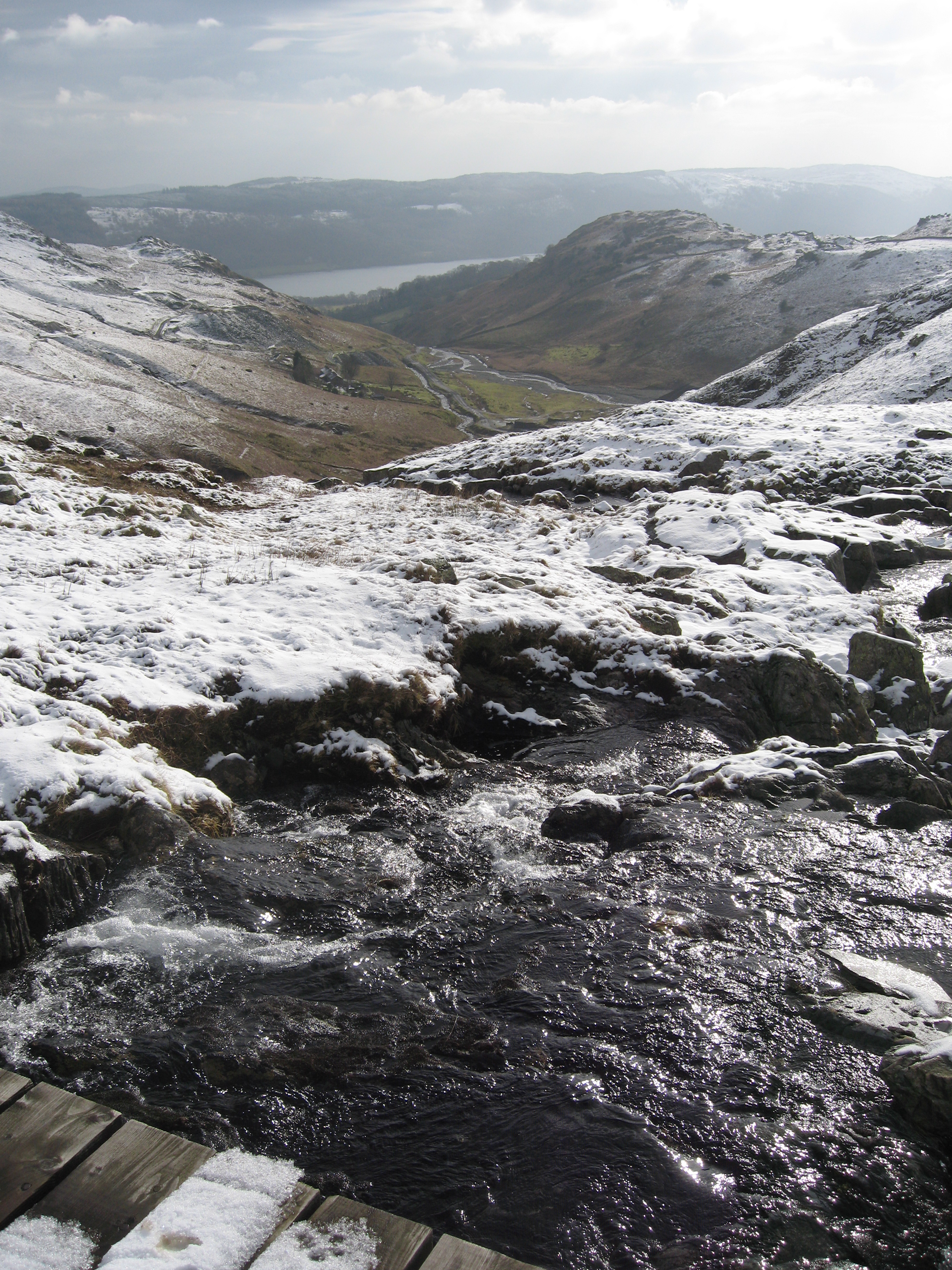
Miners BridgeIn February half term we took advantage of a bright, cold day to walk up Copper Mines Valley through the snow line to Levers Water behind Coniston.  As the valley has been worked for centuries, it’s an easy walk up well defined roads, including this beautiful Miners Bridge (left).  Past Irish Row and the Mine Captain’s House to the remains of the wheel house at Red Dell (right, slate tower on the right of the beck) Copper Mine Valley and Red Dellwhere we stopped for Kendal Mint cake and to make a scary snow man.  Red Dell SnowmanThen more of a sheep track through the snow up to Levers Water (right).Levers Water

Then back down again with a lovely view of Coniston Water at the end of the valley. Coniston from Copper MineWe stopped for chips at the very welcoming Sun Inn – barman provided free bread and butter when we mentioned chip butties!  The “One in the Waistcoat” had a pint of Bluebird (Coniston Brewing Co.) whilst I had half a Loweswater Gold (Cumbrian Legendary Ales).

The walk took 2 hours including stops with 3 children and a dog.  Remember to take a map!

This gallery contains 6 photos


1 Comment

Dorothy’s Daffodils

On Thursday 15th April 1802, Dorothy Wordsworth wrote in her journal:

‘… I never saw daffodils so beautiful they grew among the mossy stones about & about them, some rested theirwordsworth daffodils heads upon these stones as on a pillow for weariness & the rest tossed & reeled & danced & seemed as if they verily laughed with the wind that blew upon them over the Lake, they looked so gay ever glancing ever changing. This wind blew directly over the lake to them. There was here & there a little knot & a few stragglers a few yards higher up but they were so few as not to disturb the simplicity & unity & life of that one busy highway…”’

Two years later, when her brother wrote: “I wandered lonely as a cloud …”, his wife, Mary, contributing what Wordsworth later said were the best two lines in the poem : “They flash upon that inward eye / Which is the bliss of solitude”.  This group of three’s collaboration for such an iconic poem always makes me think of how many other unseen contributors there must be to great works of art.

If you need a little inspiration, why not come to Sykehouse Cottage in March and search for wild Wordsworthian daffodils?  Wild daffodils are simpler and shorter than the tall, fancy ruffle cultivars we see in gardens.  They like to grow on damp ground under trees.  Dorothy and William Wordsworth found theirs at Ullswater but wild daffodils are more common in the South Lakes.  Probably the best place to see them from Sykehouse Cottage is on the banks of the Duddon.  A short drive and a lovely walk to find your own secret “host of golden daffodils”.

For further information about the Wordsworths and their time in the Lakes, including Dorothy’s journals, you should really plan to visit Dove Cottage and the Wordsworth Museum in Spring 2020 when their redevelopment will be complete.  It’s just a 40 minute drive from Sykehouse cottage through beautiful countryside.  Follow this link to Dove Cottage.

If you would read another post about Wordsworth : The Westmorland Girl :  click here.