Sykehouse Cottage

A beautiful C17th Holiday Cottage in the Lake District


Hardknott Fort

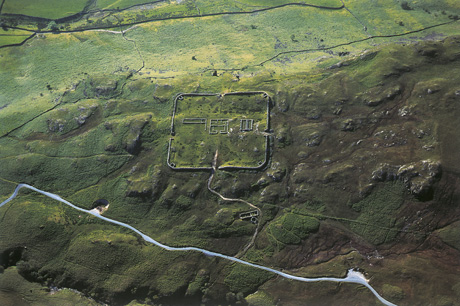
Hardknott Roman FortHardknott Fort, at the western end of Hardknott Pass, is one of the most remote and dramatically sited Roman forts in Britain and is well worth the 30 minute drive from Sykehouse Cottage for a look around and to marvel at the sheer tenacity of the Romans. Though I must point out that the road up to it is single track and that reversing skills may be needed if you meet another car!

The stronghold was built early 2AD and an inscription says that the garrison was the 4th Cohort of Dalmatians, all the way from the Balkans.  It was abandoned in the 3rd century and the stone was pilfered over a long period.  However there is still enough to see the outlines of central buildings: the headquarters, a small temple and the commander’s residence.  Also the remains of a bath house alongside the road leading up to the fort.  We find it incredibly atmospheric and, as one of the tribe is a budding gladiator, it’s a perfect place to sit and imagine life 2000 years ago and perhaps  … for a leisurely picnic!

It is an English Heritage site and further details can be found following this link.


Norman Nicholson : The Fierce South Lakes Poet

norman nicholsonThe sun has set / Behind Black Combe and the lower hills, / But northward to the fells / Like gilded galleons on a sea of shadow / Float sunlit yet. (South Cumberland, 16 May 1943)

Norman Nicholson was born in 1914 and apart from the two year bed rest he spent in a sanatorium, Norman lived his whole life in Millom, writing poems both about the fells and the ironworks.

His poems have a honesty and a sometimes shy, sometimes defiant, open handedness about them which makes them very appealing.

His obituary in The Times described Norman as “provincial”.  He fought against this term as a put down and defended the label as a valuable, compassionate and humane perspective on life which we all respond to.

In his most famous poem, “The Pot Geranium”,  he describes the little plant thus: ” “A pot geranium flies its bright balloon … My ways are circumscribed, confined as a limpet / To one small radius of rock; yet / I eat the equator, breathe the sky, and carry / The great white sun in the dirt of my finger nails.”  Wow.

Millom is a 15 min drive from Broughton and you can breathe the sky by visiting Hodbarrow, a major RSPB nature reserve. It borders an artificial lagoon, a legacy of the iron ore workings, and where many species of bird may be seen including terns, ringed plovers, redshanks and oystercatchers. Perhaps even a great crested grebe. They nest on the island here. This magnificent bird was almost hunted to extinction in the UK and is now a protected species. For further details of the reserve follow this link.

© The Trustees of the Estate of Norman Nicholson, by permission of David Higham Associates Limited


Museums at Night Festival 2013

2013 Museums at NightThere is something deliciously exciting about being somewhere you are not normally allowed – especially at night.  Here in the South Lakes there are some fun things to do over the 16 – 18th May as part of the national Museums at Night Festival.

‘a greeting of good ale’ 16 May 7.30-9.00 £4 Dove Cottage. Wordsworth is famously known as the “simple water-drinking bard”, but the archives tell a different story.  Discover more about the history of Dove Cottage, formerly the Dove and Olive-Bough Inn,  and enjoy a free beer and food tasting.   Further details at The Wordsworth Trust website here.

Arts & Crime, Murder at Blackwell 16 May at 5.30, 6.30, 7.30, 8.30. Free but limited to 15 so booking essential.  You’ve mistakenly entered the end of a dinner party in the 1920s: what has happened and is someone still ‘at large’? Let the theatre company, Bear Necessities, lead you through Blackwell in search of the culprit.  Further details at the Blackwell website here.

Dozing at Dove Cottage 17 May & Secret Sleepover 18 – 19 May Dove Cottage  Dozing at Dove Cottage, for 14+, will be an eventful evening of activities exploring the cottage, a bite to eat, and a movie marathon followed by the sleepover.  Listen to some ghostly tales on the torch-lit trail and enjoy twilight arts & crafts activities before setting up camp in the museum for the night!  The Secret Sleepover is for children aged 7 – 13 years old, but adults will enjoy it too – a minimum of 1 adult for every 5 children. £10 pp includes breakfast, accommodation and materials for activities. Further details at The Wordsworth Trust website here.

Cranium Sculptorades at Abbot Hall 18 May From 6.00pm, games start after 7 until 10.  Free event, just turn up on the night!  Why stay in and play board games when the Lakeland Arts Trust team is challenging teams of visitors to a giant game of Cranium Sculptorades? Further details at the Abbot Hall website here.


Duddon Iron Furnace

duddon valley blast furnaceThe restored remains of Duddon Iron Works are the most complete surviving example of  a charcoal-fired blast furnace in the country and, happily for us, are just past the Duddon Bridge outside Broughton in Furness.  It’s such a beautiful building, in a lovely setting and I marvel at the ingenuity and elegance of the Works.

In the 18th Century, blast furnaces revolutionised the way iron ore could be processed. Large furnaces were built using water power to drive bellows which could pump air into the combustion chamber to create an intense heat.  The water wheel is missing but the course of the leat (or stream) has been traced, bringing water from the river half a mile away. Higher up the hill is the charcoal store, 100 feet in length, and as high as a church.

Duddon Ironworks was established in 1736 and operated until 1866, smelting iron ore bought in by boat from Millom.  Pig iron cast here was sent down to Chepstow and Bristol where it was used in the manufacture of anchors, chains and other iron work for ships.  It’s called “pig iron” because the molten metal ran out at the base of the furnace into sand moulded into a branching structure of one central runner and lots of little ingots which looked rather like a litter of piglets suckling on a sow.

The buildings are in the care of the Lake District National Park. At the site, this information panel (right) gives a description of the various parts of the furnace and, in the drawing, you can see the ingots laid out.Duddon Iron Works

If you take the road out of Broughton, past the High Cross, towards Millom (A595), immediately after the bridge, turn right and the furnace is a short way along on the left and can be seen from the road.


Swill Basket Making in Broughton

swill1A swill is one of the most pleasing objects one could wish to possess.  It is a thing, complete and contained in itself, needing no explanation or props,  assured and possessed of a simple confidence – being both useful and beautiful.  As Ruskin said: ‘Nothing can be beautiful which is not true’ and a swill basket whispers “true” in a very lovely and understated way.

It is made from thin strips of woven oak and, so, is light and strong.  The closeness of the weave means that it is suitable for holding even very fine material. On the farm, these versatile baskets could be used for harvesting potatoes yet also for sowing seed. They were also used to carry coal or bobbins and, today, our family uses them as laundry baskets and, when there’s a baby, as a cradle.

The South Lakes was once a great centre for swill basket making. Bulmer’s Directory of Furness and Cartmel of 1910 showed a total of 13 swill-making shops in the area and, in Broughton, the focus of this industry was a cluster of buildings behind Cinder Hill, down by the park.

Today, there is just one man in the country who makes his living out of swill baskets. His name is Owen Jones and he lives at High Nibthwaite close to Coniston Water.  He was taught in 1988 by a retired ‘Swiller’ from Broughton called John Barker.  Owen runs workshops from his house and travels around the country attending fairs where you can see him making swills.  He has no trouble selling everything he makes.  If you would like further information about Owen and his work, click HERE for his own website.

There’s a swill in Sykehouse Cottage.  It is usually left on the stairs windowsill for guests to admire and use – if you’ve got any washing to hang out.  Carry your basket with one hand, the rim resting nicely on your hip bone.


1 Comment

Donald Campbell : A Very Small Personal Encounter

Donald Campbell

Bill was in the Sun Hotel, Coniston, with his Granny in late December 1966 when he met Donald Campbell who was practising for his final, and unfortunately fatal, water speed record attempt on Coniston Water.

As a very small boy, Bill vividly remembers Campbell surrounded by friends in the hotel’s corridor, bending down to ask him : “Do you like cars?”  Bill said, “No.”  “Do you like boats?” “No.”  “Do you like chocolate?”  “Yes!”  This raised a big laugh from Campbell and his friends, and the man gave him a Mars bar – a huge prize for a small boy with such an unyielding attitude!

Coniston is only 9 miles and 15 minutes drive away from Sykehouse Cottage.  The Ruskin Museum in Yewdale Road has a new wing with many interesting photographs and displays of memorabilia about the Campbell family, the Bluebird and the Record Attempt.

If you want to read my post about the Ruskin Museum, click here.  Alternatively the link to the Museum’s quirky website for opening times and more information is here.


Thomas the Tank Engine and The Island of Sodor

Isle of Sodor 1958 map

The Rev W Awdry, the inventor of the Thomas the Tank Engine, was asked his readers where the stories took place.  Well, his first books took place entirely in his imagination so he was a little stuck for an answer.  Whilst on holiday on the Isle of Man, he discovered that the local bishop there had the title “Bishop of Sodor and Man”. (Sodor relates to the Southern Hebrides.)  Rev W Awdry liked the name and invented the fictional Isle of Sodor, located between the Isle of Man and Walney Island, just off the Furness peninsular.  This map from 1958 shows this railway Atlantis, some five times the size of the Isle of Man, with Barrow, Ulverston and Millom all shown on the mainland.  Later the Isle of Sodor was modified to incorporate Walney Island.

Many stories in his books were based on real events from the South Lakes: “Gordon the Big Engine” includes a Thomas adventure called “Down the Mine” and is based on an incident when an engine fell down a deep hole at Lindal-in-Furness in 1892; Edward was probably based on the4-4-0 K2 Large Seagull class introduced on the Furness Railway in 1896; Boco was based on the BR Metropolitan Vickers diesel electric type 2 locomotive introduced in 1958, which worked mainly in the Barrow area; and several stories are also based on the nearby Ravenglass & Esdale Railway (La’al Ratty) which the Rev W Awdry visited a number of times.

Thomas often visits the Lakeside & Haverthwaite Railway (about 20 minutes drive East from Sykehouse Cottage).  Follow this link for more information.

You can find out opening times and train fares for the La’al Ratty here.

Copper Mines Walk at Coniston

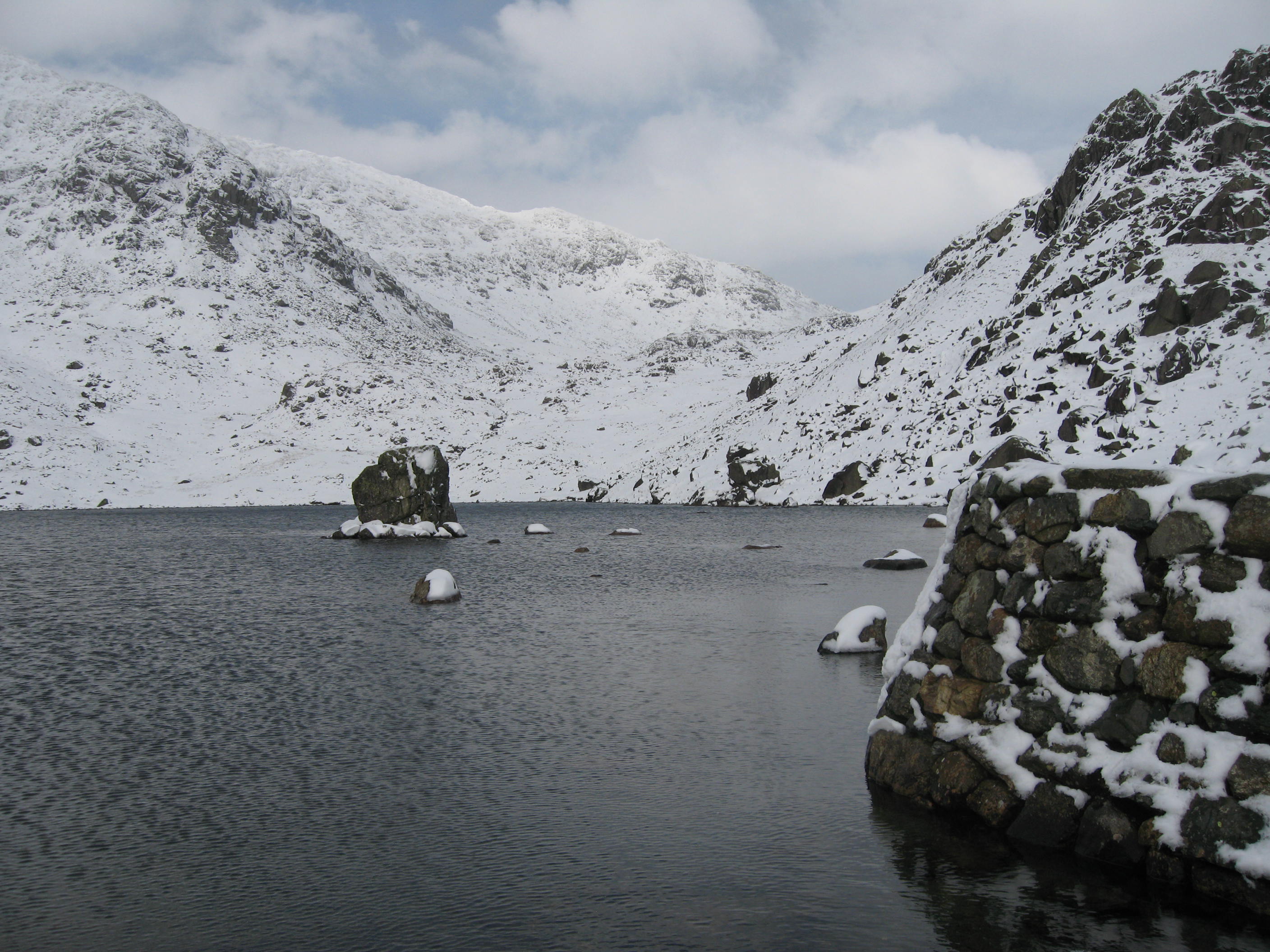
Miners BridgeIn February half term we took advantage of a bright, cold day to walk up Copper Mines Valley through the snow line to Levers Water behind Coniston.  As the valley has been worked for centuries, it’s an easy walk up well defined roads, including this beautiful Miners Bridge (left).  Past Irish Row and the Mine Captain’s House to the remains of the wheel house at Red Dell (right, slate tower on the right of the beck) Copper Mine Valley and Red Dellwhere we stopped for Kendal Mint cake and to make a scary snow man.  Red Dell SnowmanThen more of a sheep track through the snow up to Levers Water (right).Levers Water

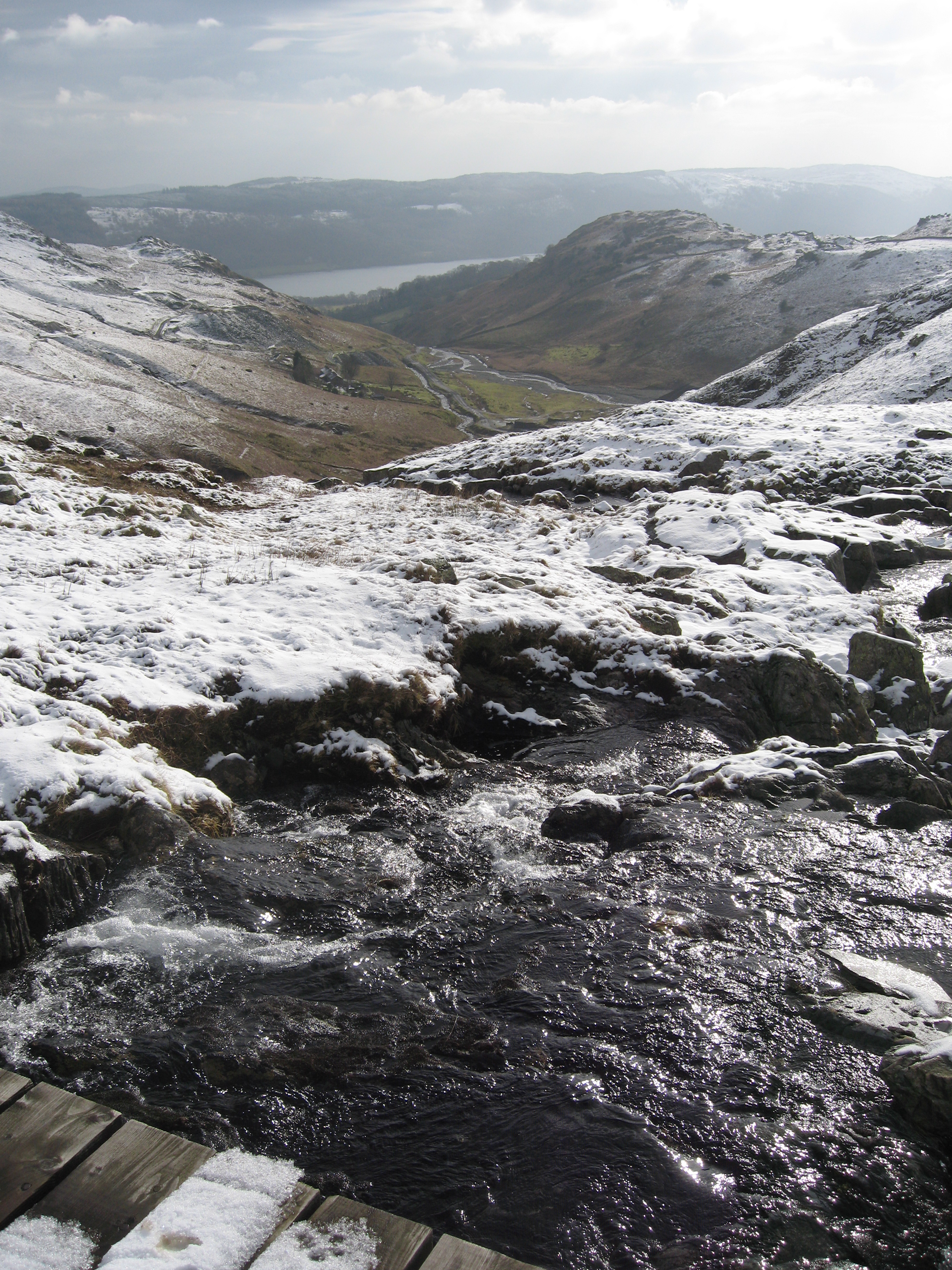
Then back down again with a lovely view of Coniston Water at the end of the valley. Coniston from Copper MineWe stopped for chips at the very welcoming Sun Inn – barman provided free bread and butter when we mentioned chip butties!  The “One in the Waistcoat” had a pint of Bluebird (Coniston Brewing Co.) whilst I had half a Loweswater Gold (Cumbrian Legendary Ales).

The walk took 2 hours including stops with 3 children and a dog.  Remember to take a map!

This gallery contains 6 photos


1 Comment

Dorothy’s Daffodils

On Thursday 15th April 1802, Dorothy Wordsworth wrote in her journal:

‘… I never saw daffodils so beautiful they grew among the mossy stones about & about them, some rested theirwordsworth daffodils heads upon these stones as on a pillow for weariness & the rest tossed & reeled & danced & seemed as if they verily laughed with the wind that blew upon them over the Lake, they looked so gay ever glancing ever changing. This wind blew directly over the lake to them. There was here & there a little knot & a few stragglers a few yards higher up but they were so few as not to disturb the simplicity & unity & life of that one busy highway…”’

Two years later, when her brother wrote: “I wandered lonely as a cloud …”, his wife, Mary, contributing what Wordsworth later said were the best two lines in the poem : “They flash upon that inward eye / Which is the bliss of solitude”.  This group of three’s collaboration for such an iconic poem always makes me think of how many other unseen contributors there must be to great works of art.

If you need a little inspiration, why not come to Sykehouse Cottage in March and search for wild Wordsworthian daffodils?  Wild daffodils are simpler and shorter than the tall, fancy ruffle cultivars we see in gardens.  They like to grow on damp ground under trees.  Dorothy and William Wordsworth found theirs at Ullswater but wild daffodils are more common in the South Lakes.  Probably the best place to see them from Sykehouse Cottage is on the banks of the Duddon.  A short drive and a lovely walk to find your own secret “host of golden daffodils”.

For further information about the Wordsworths and their time in the Lakes, including Dorothy’s journals, you should really plan to visit Dove Cottage and the Wordsworth Museum in Spring 2020 when their redevelopment will be complete.  It’s just a 40 minute drive from Sykehouse cottage through beautiful countryside.  Follow this link to Dove Cottage.

If you would read another post about Wordsworth : The Westmorland Girl :  click here.


1 Comment

Wordsworth’s The Westmorland Girl

In 1845, Wordsworth aged 75  wrote a poem to his grandchildren about a free spirited orphan girl who rescued a lamb from drowning:

“And the bleating mother’s Young-one, / Struggled with the flood in vain; / But, as chanced, a Cottage-maiden / (Ten years scarcely had she told) / Seeing, plunged into the torrent, / Clasped the Lamb and kept her hold.”

And, taking this one incident, the old man then inflated her brave and dramatic gesture to more lofty and inspiring heights for the younger members of his family:

“Watchful as a wheeling eagle, / Constant as a soaring lark, / Should the country need a heroine, / She might prove our Maid of Arc.”

This “Maid of Arc”, Sarah Davies, came to live in Broughton-in-Furness. She was buried in an unmarked grave on 4th September 1872 aged 37, a week after giving birth to a baby boy.

According to HV Koop who wrote a history of the town, a wreath was laid on her grave at the Wordsworth Centenary in 1950 and our local historian, Wal Greenhalgh, did much sleuthing to verify the facts.  A Sarah Mackereth was born in Grasmere in 1834 (or 5) and she married Samuel Davies in 1867.  The family moved to Broughton after the census of 1871 and in a town directory of 1876 there’s an entry for Samuel Davis as the farm bailiff at Eccleriggs.

When I contacted the staff at Wordworth Trust, they were delighted with this nugget of Wordsworthalia and Rebecca Turner, the Assistant Curator, added a little extra information from their collections:  in a letter of 1834, Wordsworth writes: “The little Poem which I ventured to send you lately I thought might interest you on account of the fact as exhibiting what sort of characters our mountains breed. It is truth to the Letter”. 

Fabulous! … what sort of characters our mountains breed”.

How did they know where to lay the wreath?

According to Wal Greenhalgh, the Vicar of the time wrote in the margin of the Parish Register: “Wordsworth’s Westmorland Girl” next to her name and, with great good fortune, the Barrow Record Office holds the Sexton’s notebook which details: “interred between Hancock’s tombstone of Myreside and William Fleming’s tombstone.”westmorland girl
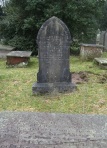
If you would like to go and pay your respects in St Mary Magdalene’s churchyard, follow these instructions: from the South east corner of the church walk, at right angles to the church, into the graves (minding the crocuses and snowdrops!).  As you walk, keep looking to you right, soon as you come parallel to a sundial monument some graves away and half hidden by a tree, you’re at the spot. Find Jacob Knight’s tombstone (pictured), which is between Hancock’s and Fleming’s grave, and her unmarked grave is there, roughly under Jacob Knight’s.

If you would read another post about Wordsworth : Dorothy’s Daffodils :  click here.