
The dry stone walls of the Lake District are such beautiful things. Walking alongside and over them on our ramblings across the South Lakes we have become quite adept spotting various holes and ledges in these field enclosures.
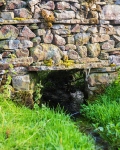 There’s a SMOOT which, I think, is any small hole generally ground level in the wall. I have come across two types: a Water Smoot for drainage and a Rabbit Smoot. I was curious as to why a farmer would take the trouble to build a rabbit tunnel until I came across this on the Ruskin Museum’s website :
“Smoots allowed rabbits and hares to pass from the fell into the intakes (fields). Sometimes stone-lined pits were dug below the smoots having a wooden trough, above which was a counter- weighted trap door. The rabbit would fall into the pit and this could be used to supplement a countryman’s diet.”
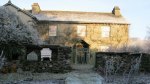 Occasionally in walls beside farms, we have also come across a small recess with a slate base. This is a BEE BOLE. The farmer would put his straw bee hive or skep on this to protect it from rain and wind. A Bee Bole usually faced South to South East so that the morning sun would warm up the hive. You can see a Bole at Beatrix Potter’s Hill Top though it is filled with a more modern hive. Click here for more about Hill Top.
If you are interested in discovering more about Bee Boles there’s a delightful website run by the International Bee Research Association called the Bee Bole Register. (What else?) Click here for the link.
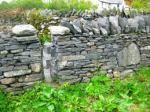 And a SQUEEZE STILE is just as you would imagine … instead of steps built into the wall, you must squeeze through the small gap. Unfortunately, overweight dogs of the Team Rigg party need to be lifted over the obstacle.

 Sykehouse Cottage