
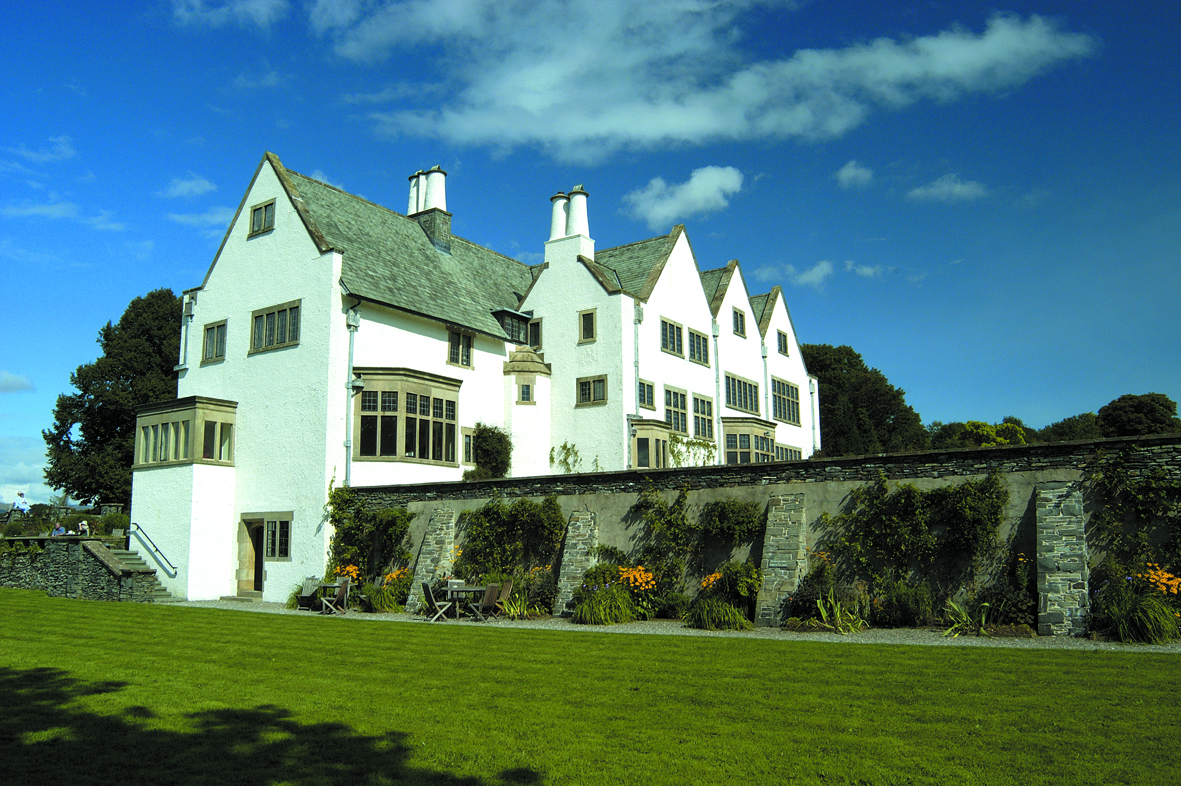
 Blackwell was built in 1900 as a holiday retreat for a wealthy Manchester brewery owner, just south of Bowness overlooking Windermere. (About 30 minutes drive from Sykehouse Cottage on the eastern side.) The house is of international importance and was given a Grade 1 listing in 1998. So, although it’s quite expensive to visit – 2020 Admission prices : £9.80 Adults (without donation £8.80) – it is DEFINITELY worth the money if you are interested in the Arts and Crafts. The last family I recommended the place to, weel, they stayed all day!
It is a truly wonderful example of Arts and Crafts architecture, with many original decorative features still intact and there is a school of thought that Blackwell is such a complete vision precisely because it was built as a holiday home in the Lake District rather than a day to day residence. Think about it: who could live up to the designer’s perfect vision 24 – 7?
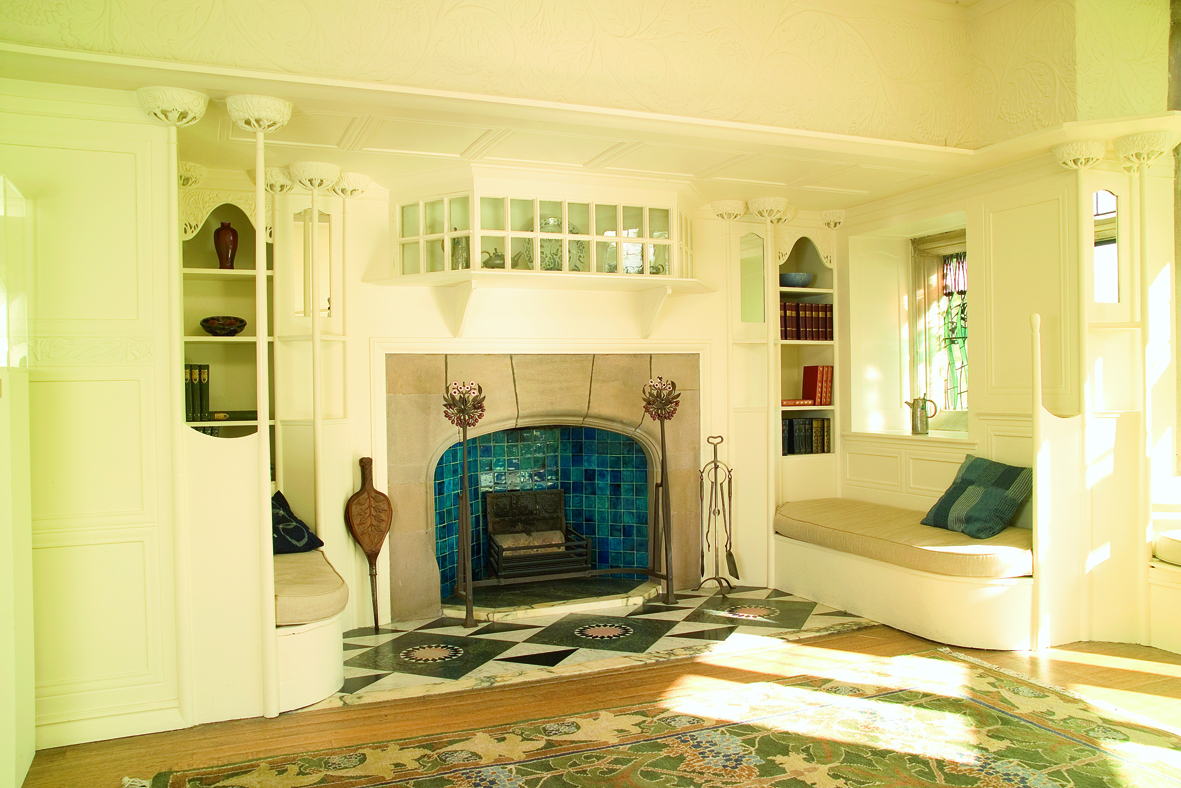
 The rooms are carefully furnished with the blend of Arts and Crafts and early country-made furniture advocated by Baillie Scott, containing many pieces by the leading Arts & Crafts designers and studios – furniture by Morris & Co and Voysey, metalwork by W A S Benson and ceramics by Ruskin Pottery and William de Morgan.
The curators want you to experience this first hand and, deliciously, visitors are encouraged to sit and soak up the atmosphere in the beautiful fireplace inglenooks and are free to enjoy the house as it was originally intended, without roped-off areas.
The house also run a series of well curated exhibitions and displays, usually with an Arts and Crafts feel, throughout the year and have a lovely Tea Room.
Open daily. From 1 November – 29 February 2020. Though they are closed Christmas and Boxing day and 6 – 23 January for annual maintenance. The opening times are: House and Shop: 10.30am – 4.00pm; Tearoom: 10.00am – 4.00pm. From 1 March – 31 October opening times are longer: House and Shop: 10.30am – 5.00pm. Tea Room: 10.00am – 5.00pm. Last admission to house 45 minutes before closing.
Further details can be found by visiting Blackwell’s own site here.
 Rydal Mount is a privately run house with beautifully landscaped gardens shaped by Wordsworth. Their website can be reached
  be found
 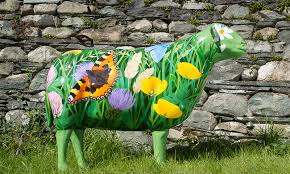 firm will be displayed around Keswick, Grasmere, Rydal, Ambleside and Windermere. The animals will be placed in public places and follow the route of the 555 bus service.
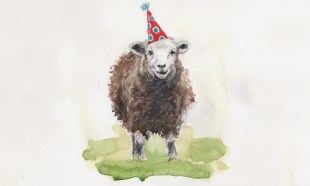 draw /paint designs of herdwicks onto the main herdwick model. The designs will be applied in such a way that they will look like the sheep model is marked with traditional ‘smit’!” To have a look at more of Jo’s work, click on this link for her
 From this half term, the Museum of Lakeland Life and Industry will be running an exhibition of old photographs and artefacts to shed light on a fascinating and unique part of Kendal’s history, the town’s “Yards”. The museum’s display will attempt to answer such questions as: What was life like the Yards? Who lived and worked there? How did they get their names?
 Abbot Hall, Blackwell House and the Wordsworth Museum in Grasmere are all favourite trips out for us when we are staying at Sykehouse Cottage. I sometimes think people forget about these fine museums in their haste to get up a mountain …
 Then from 11 March, both Abbott Hall and Blackwell will be showing “Laura Ford: Sculpture and Drawings”. Located at Blackwell on the lawns, with select pieces in the main house and at Abbot Hall, this exhibition will comprise Ford’s earlier work together with new sculptures. Laura Ford describes her work as sculptures dressed as people who are dressed as animals, as they meld together ideas of childhood memory with a disturbing edge.
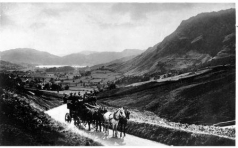 The Wordsworth Museum in Grasmere has its “Shepherds to Charabancs” exhibition running until 28 February. Subtitled “Changing Life in Grasmere 1800 to 1900” the show has been inspired by a recent addition to the museum an 1859 survey map of Grasmere. Curated by The Grasmere History Society the exhibition explains the transformation of Grasmere through local stories and brought alive with objects belonging to local residents as well as maps, artefacts and images from the Wordsworth Trust’s collection.

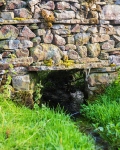 There’s a SMOOT which, I think, is any small hole generally ground level in the wall. I have come across two types: a Water Smoot for drainage and a Rabbit Smoot. I was curious as to why a farmer would take the trouble to build a rabbit tunnel until I came across this on the Ruskin Museum’s website :
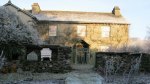 Occasionally in walls beside farms, we have also come across a small recess with a slate base. This is a BEE BOLE. The farmer would put his straw bee hive or skep on this to protect it from rain and wind. A Bee Bole usually faced South to South East so that the morning sun would warm up the hive. You can see a Bole at Beatrix Potter’s Hill Top though it is filled with a more modern hive.
 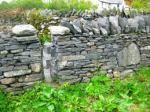 And a SQUEEZE STILE is just as you would imagine … instead of steps built into the wall, you must squeeze through the small gap. Unfortunately, overweight dogs of the Team Rigg party need to be lifted over the obstacle.
 Sykehouse Cottage