A great day out from Sykehouse Cottage – especially if you have children – is the Ravenglass & Eskdale Railway. It’s a 30 minute drive up to A595 and we sometimes include Muncaster Castle for a very full day out.
Built in 1875, it is the Lake District’s oldest and longest narrow gauge steam railway and known locally as La’al Ratty or The Ratty. Its original purpose was to ferry iron ore from workings at Boot down the valley to Whitehaven Iron Mines Ltd. The narrow gauge railway provides a lovely 7 mile journey, through some of the Lakes prettiest scenery, from the coast up into the Fells. There are good, easy walks from many of the stops and, at Ravenglass, there is a small railway museum and café. They often have special events for holiday weekends. For more information click here for their website.
‘We sat on the snow and looked at the country far below us … we nibbled Kendal Mint Cake.’ The famous quotation on the Romney’s bar linking Edmund Hillary’s successful ascent of Everest with eating a toe curling mixture of sugar, glucose and peppermint oil must be one of the most famous and successful celebrity endorsements of all time. We always have a bar or two in a rucksack when we are walking – only when we are walking. It is too sweet to be eating sitting down. However it is very useful when junior members of the tribe are flagging and a pick-me-up is needed. This may also include the who-can-keep-a-piece-in-their-mouth-the-longest competition for added distracting interest.
The Museum of Lakeland Life and Industry has just opened an exhibition all about this famous local delicacy: Kendal Mint Cake: On Top of the World running from 19 July right through until 21 December. On 31 August, the Museum is holding Mint Cake Eating contest and an auction of the world’s biggest bar of Kendal Mint Cake which will be broken up and sold in aid of MacMillan Cancer. Further details of the exhibition and how to enter the competition can be found following this link.
I have read all the Beatrix Potter stories to the children at bedtime. Some more often than others. Certain tales were as delightful and easy to read as well paced poems (Jeremy Fisher); others were a vicious, verbal obstacle course for a very tired reader to stumble over and I used to hide them behind other books (The Pie and the Patty Pan, anyone?) So the boys and I absolutely charmed when we visited Potter’s Hill Top Farm run by the National Trust for, instead of a worthy guide book, we were given copies of “The Tale of Samuel Whiskers”. (This was the boys’ favourite though I found Tom Kitten’s close shave quite unnerving.) We were instructed to search the house for the exact places Potter had drawn for the book. Well done the National Trust for thinking of such a thing! The boys were entranced to find the VERY skirting board, the stairs etc from her watercolours and trace the story of the enormous, old, thieving rat, and the ever resourceful Maria, around the house.
Be warned Hill Top Farm is extremely popular and entry is by timed ticket only. Allow plenty of time of park – because there’s not much of it and it’s a walk from the site. Click here for the official site.
Tarn Hows is another favourite walk of ours – particularly when we have friends with pushchairs or just want to “walk and talk” instead of concentrating on finding the next sheep track, as it’s a stunningly pretty round walk on smooth paths with plenty of benches along the way. The place is owned by the National Trust, has a well managed car park – and possibly an ice cream van in high season. They even have a couple of those nifty Tramper scooters giving people who are less mobile a chance to roam a little. So, if you are staying at Sykehouse Cottage and fancy a stroll rather than a hike, Tarn Hows is the place for you. It’s only 25 minutes from Broughton in Furness, past Coniston Water.
For all its natural beauty, the tarn is artificial. It was created in the mid C19th by the owner out of three much smaller, boggier pools. He also landscaped the area, building the footpaths and planting the magnificent, non-native trees such as the Giant Sequoia which give the place a rather Scottish feel. Tarn Hows was designated a Site of Special Scientific Interest in 1965 with red squirrels, Herdwick sheep, both red and roe deer and Daubenton’s (or water) bats living in the area.
Tarn Hows is open dawn to dusk all year round. Further details can be found on the National Trust website here.
The immense satisfaction of finding something unexpected, yet wholly delightful, amongst trees has to be hot wired into the most primitive part of our brains.
Rambling around Grizedale Forest looking for sculpture is one of our favourite days out. The tribe can run about to their heart’s content (waving sticks, climbing over logs and jumping out shouting BOO!), whilst I stand still and contemplate art, and it’s only half an hour’s drive from the cottage in Broughton-in-Furness.
Grizedale has the largest outdoor collection of site-specific art in the UK. Created over 30 years, it holds about 50 permanent pieces but nobody’s quite sure how many as some, inevitably, have rotted away. Last month, two new sculptures were added to the collection. “Concrete Country” by Lucy Tomlins is an out-sized concrete country stile and “Romeo” by Owen Bullet & Rupert Ackroyd is a carved oak totem. This was inspired by the story of Romeo, an urban fox who explored the Shard tower in London.
Grizedale Forest also hosts temporary exhibitions and events, please check out their website to find out what’s on.
There is something deliciously exciting about being somewhere you are not normally allowed – especially at night. Here in the South Lakes there are some fun things to do over the 16 – 18th May as part of the national Museums at Night Festival.
‘a greeting of good ale’ 16 May 7.30-9.00 £4 Dove Cottage. Wordsworth is famously known as the “simple water-drinking bard”, but the archives tell a different story. Discover more about the history of Dove Cottage, formerly the Dove and Olive-Bough Inn, and enjoy a free beer and food tasting. Further details at The Wordsworth Trust website here.
Arts & Crime, Murder at Blackwell 16 May at 5.30, 6.30, 7.30, 8.30. Free but limited to 15 so booking essential. You’ve mistakenly entered the end of a dinner party in the 1920s: what has happened and is someone still ‘at large’? Let the theatre company, Bear Necessities, lead you through Blackwell in search of the culprit. Further details at the Blackwell website here.
Dozing at Dove Cottage 17 May & Secret Sleepover 18 – 19 May Dove Cottage Dozing at Dove Cottage, for 14+, will be an eventful evening of activities exploring the cottage, a bite to eat, and a movie marathon followed by the sleepover. Listen to some ghostly tales on the torch-lit trail and enjoy twilight arts & crafts activities before setting up camp in the museum for the night! The Secret Sleepover is for children aged 7 – 13 years old, but adults will enjoy it too – a minimum of 1 adult for every 5 children. £10 pp includes breakfast, accommodation and materials for activities. Further details at The Wordsworth Trust website here.
Cranium Sculptorades at Abbot Hall 18 May From 6.00pm, games start after 7 until 10. Free event, just turn up on the night! Why stay in and play board games when the Lakeland Arts Trust team is challenging teams of visitors to a giant game of Cranium Sculptorades? Further details at the Abbot Hall website here.
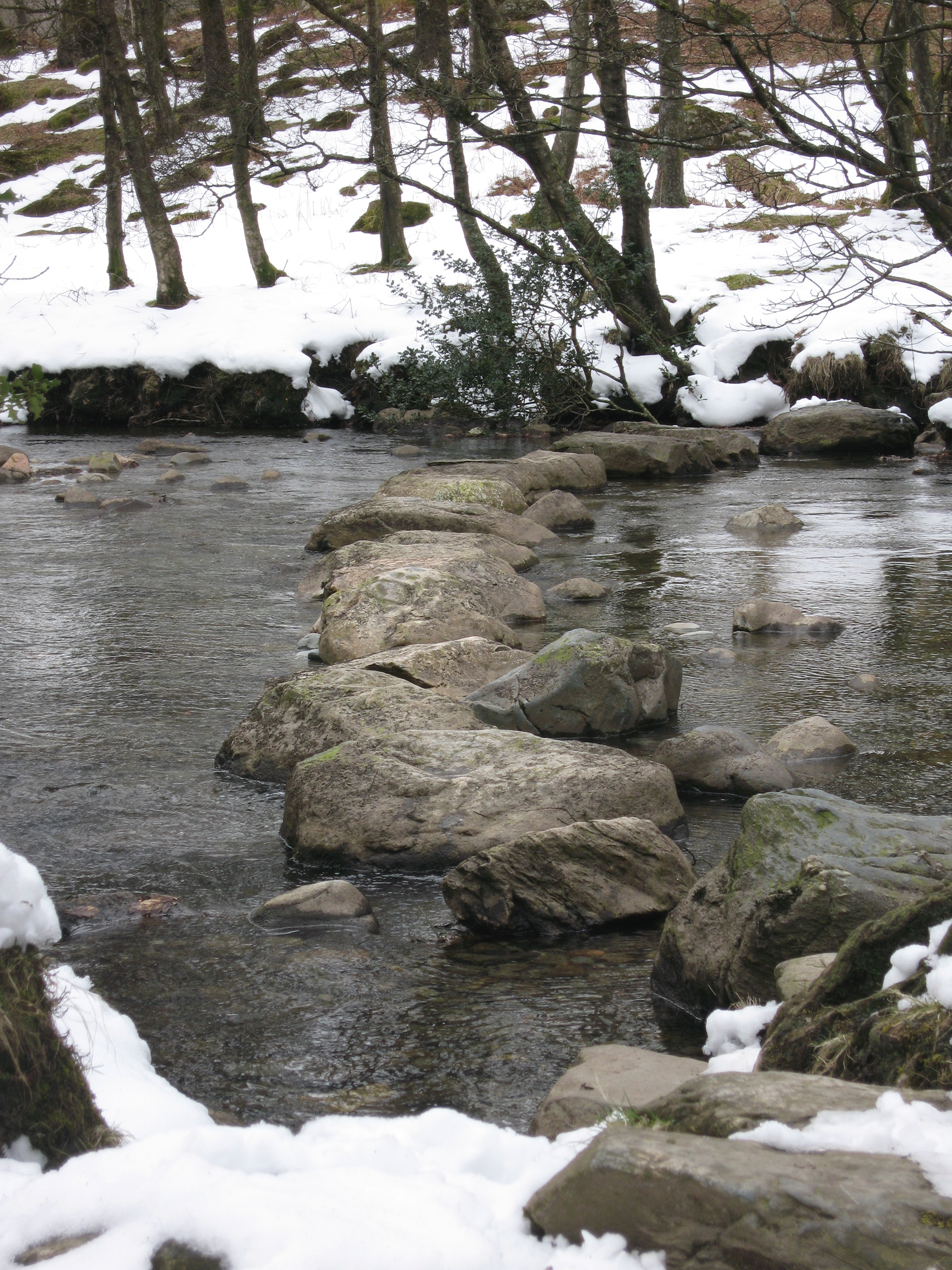
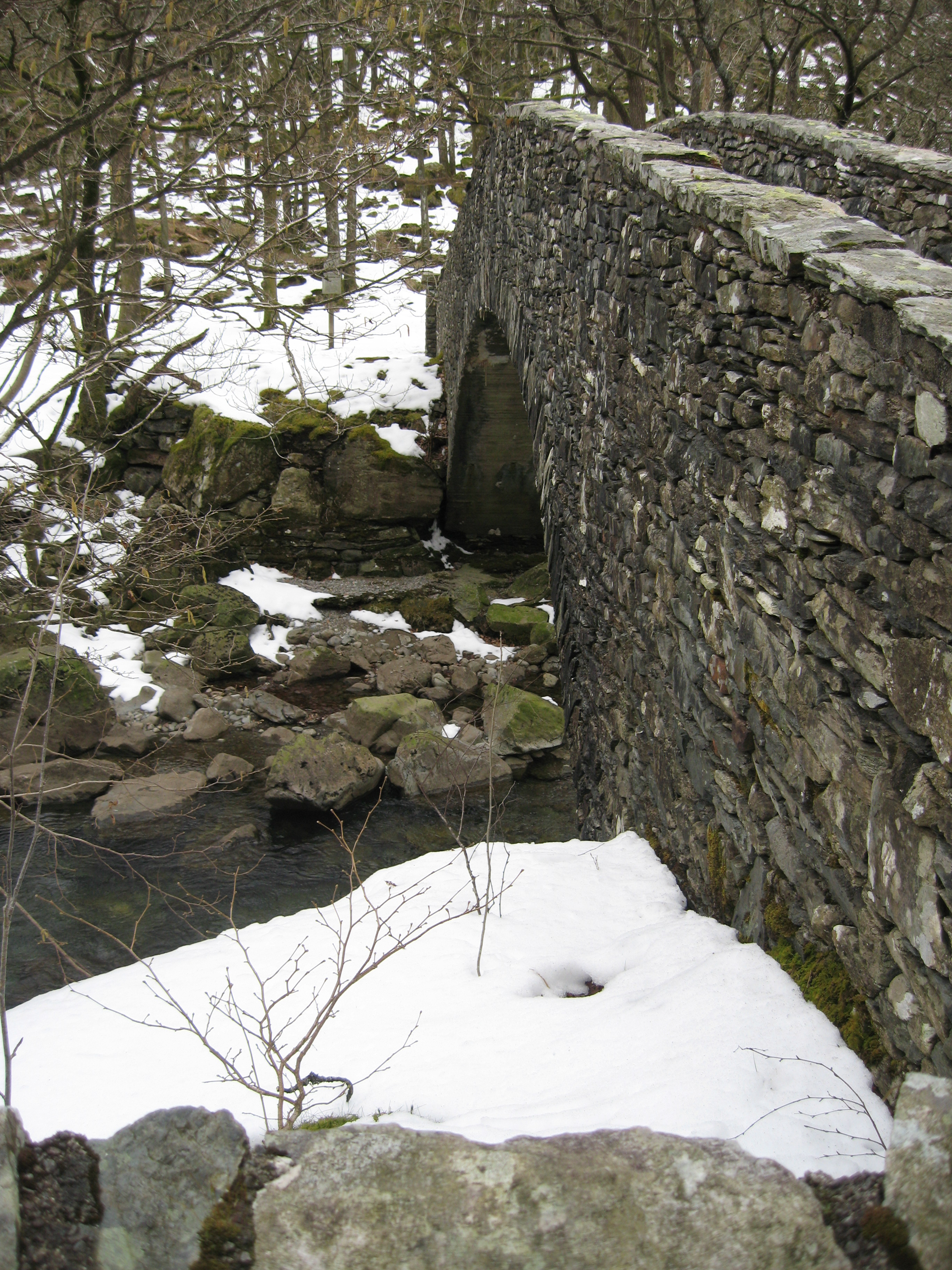
At Easter, we tramped through the snow around Wallowbarrow. This is one of our very favourite walks: a beautiful, quiet river and woodland walk along the Duddon in National Trust land. It can be as long or as short as you want and has the added bonus of starting/ending at the wonderful Newfield Inn.
In the Summer, we often picnic on a river beach and sometimes even take a dip at Watersmeet where the Tarn Beck meets the river Duddon. But today we were just grateful that someone had been around before us to tamp down the snow – which in places was higher than our wellies!
We wandered about for an hour and finished with lunch at the Newfield. Run by Paul, this c17th inn at Seathwaite has great, hearty food for walkers, a log fire and a fine selection of local beer. This lunchtime we ate their famous steak pie and Cumberland sausage and sampled Barngates’ Catnap and Cumberland’s Corby Ale. Click here for their website.
The Rev W Awdry, the inventor of the Thomas the Tank Engine, was asked his readers where the stories took place. Well, his first books took place entirely in his imagination so he was a little stuck for an answer. Whilst on holiday on the Isle of Man, he discovered that the local bishop there had the title “Bishop of Sodor and Man”. (Sodor relates to the Southern Hebrides.) Rev W Awdry liked the name and invented the fictional Isle of Sodor, located between the Isle of Man and Walney Island, just off the Furness peninsular. This map from 1958 shows this railway Atlantis, some five times the size of the Isle of Man, with Barrow, Ulverston and Millom all shown on the mainland. Later the Isle of Sodor was modified to incorporate Walney Island.
Many stories in his books were based on real events from the South Lakes: “Gordon the Big Engine” includes a Thomas adventure called “Down the Mine” and is based on an incident when an engine fell down a deep hole at Lindal-in-Furness in 1892; Edward was probably based on the4-4-0 K2 Large Seagull class introduced on the Furness Railway in 1896; Boco was based on the BR Metropolitan Vickers diesel electric type 2 locomotive introduced in 1958, which worked mainly in the Barrow area; and several stories are also based on the nearby Ravenglass & Esdale Railway (La’al Ratty) which the Rev W Awdry visited a number of times.
Thomas often visits the Lakeside & Haverthwaite Railway (about 20 minutes drive East from Sykehouse Cottage). Follow this link for more information.
You can find out opening times and train fares for the La’al Ratty here.
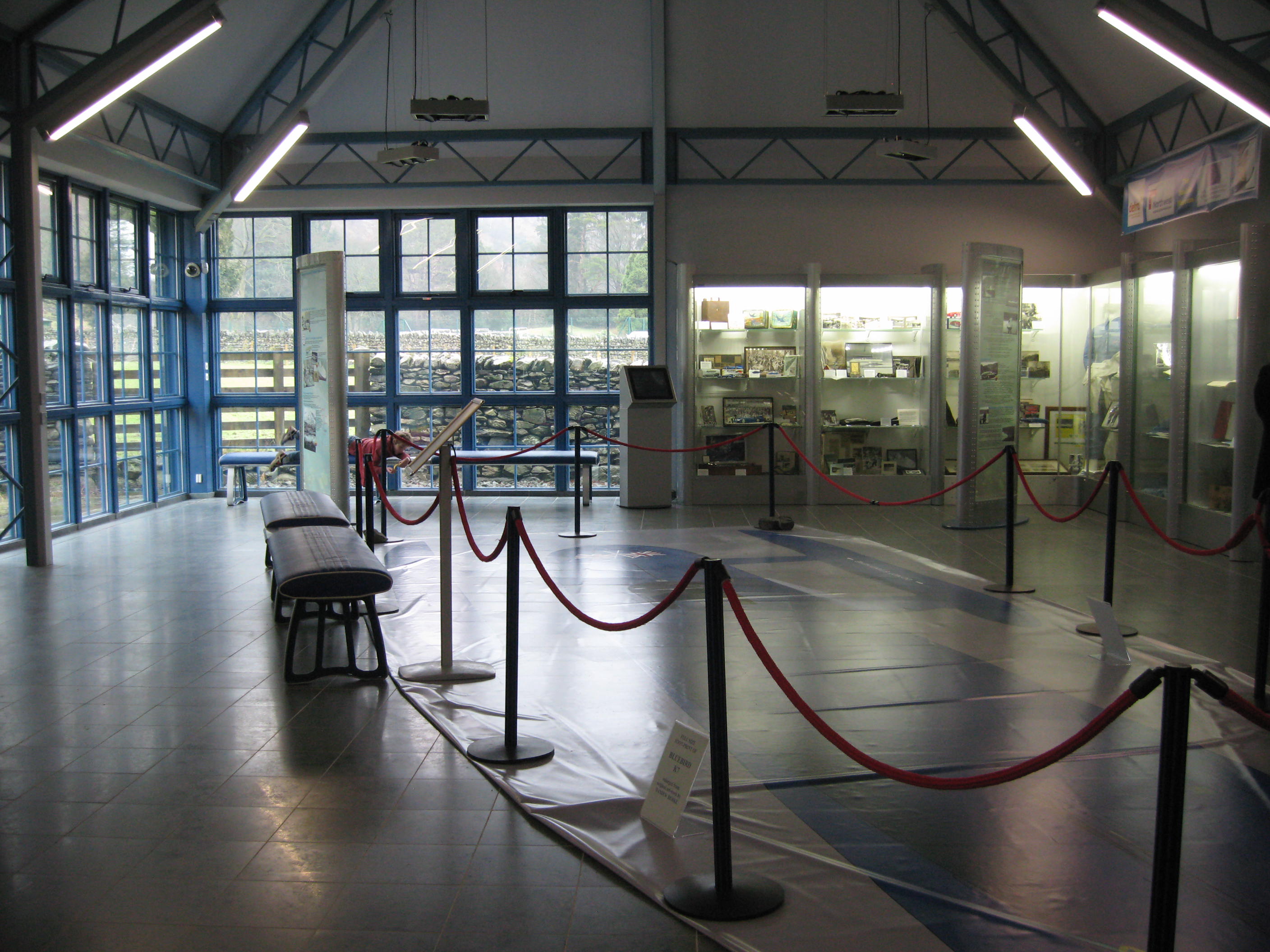
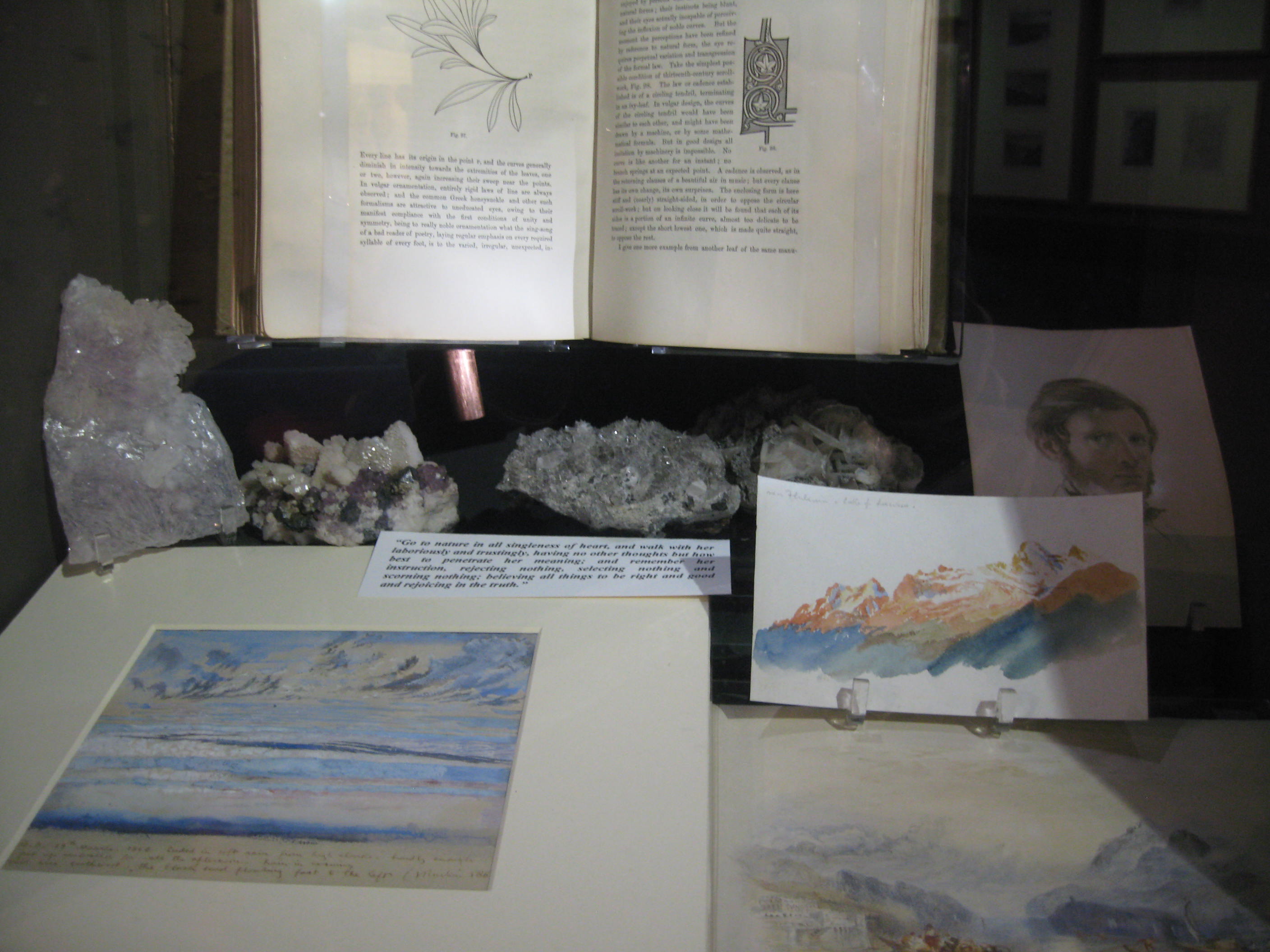
The Ruskin Museum, down a side street and hidden away, is a huge cabinet of curiosities. I felt like some sort of Alice wandering around a Museum Wonderland, each area as intriguing as the next. It’s delightful toy box of memorabilia, informative displays and original artwork. After a relatively recent revamp, its collection is split into three rooms to help visitors navigate their way around such a disparate yet fascinating collection: The Coniston Room including the small sailboat “Mavis” the original “Swallow” from “Swallows & Amazons”; The new Bluebird Room with lots of details about the World Speed Record attempt; and the Ruskin Room, a lovely Victorian parlour crammed with watercolours and other memorabilia of Ruskin and Collingwood.
What I truly like about the museum is that there is such a variety of objects that, if you are with a family, then everyone will find something of interest – although, I must confess to getting overwhelmed at so much on display. I’ll have to come on my own sometime. The boys loved the “Mavis” and the miniature stone houses from the John Usher collection. I was fascinated by the Neolithic finds and copper mining display whilst Bill spent time in the Bluebird Room, staring at grainy black and white photographs of the speed king, Donald Campbell. We all loved Ruskin’s slightly rusting and used watercolour paint boxes and dog eared sketch books.
The Bluebird Room
The Ruskin Room
You need an hour at the very least to sample its delights. The museum’s own (quirky) website is here to check on exact location in Coniston, prices and opening times.
If you want to read my post about a young boy’s encounter with Donald Campbell, click here.
If you have children under the age of 12, then you’ll know about the Owl Phenomenon: patch worked with big buttons on cushions, stamped on purses, appliqued on t-shirts, drawn on pencil cases and printed on notebook covers. It’s ALL OWLS.
Is it a trickle down from Harry Potter and Hegwig? Or from the Seventies/Scandinavian design trend we are going through? Who knows. It maybe just because they are easy to draw and relatively unisex.
Anyway, if your kids are into owls, then Muncaster Castle is a must during your stay at Sykehouse Cottage. It’s near Ravenglass and about a half hour car drive north from Broughton in Furness.
The Castle keeps over 50 species in its World Owl Centre from the giant Eagle Owl to the tiny Pygmy Owl. They breed endangered species including the British Barn Owl.
The Castle also has 70 acres of lovely grounds and the terrifically exciting and quite possibly scary (if you are under 9) Meadow Vole Maze.
You can go in the Castle as well – and check out the ghosts – but we’ve never made it inside as there is too much to do outside.
Save at least half a day for the visit. The place re-opens on 9th February 2013 and further details can be found here on their website.

 A great day out from Sykehouse Cottage – especially if you have children – is the Ravenglass & Eskdale Railway. It’s a 30 minute drive up to A595 and we sometimes include Muncaster Castle for a very full day out.




 If you have children under the age of 12, then you’ll know about the Owl Phenomenon: patch worked with big buttons on cushions, stamped on purses, appliqued on t-shirts, drawn on pencil cases and printed on notebook covers. It’s ALL OWLS.
 Sykehouse Cottage