Sykehouse Cottage

A beautiful C17th Holiday Cottage in the Lake District


Herdwick Wool Rugs

herdwick sheepThe distinctive look of Lake District fells, ribbons of stone walls and treeless slopes, has largely been created by Herdwick sheep.

The animal has been part of the landscape for centuries and there are now many products you can take home with you to celebrate this hardy breed and to remember your stay at our cottage.herdwick wool

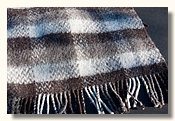
herdwick throw If you pop into Melville’s in Broughton-in-Furness, you can pick up one of our favourite local products: a beautiful Original Cumbrian Wool throw.  These are woven from undyed Duddon valley fleeces and would be a unique memento of your holiday.

A link to the Original Cumbrian Wool website is here if you would like further details. If you are handy with a needle, they sell yarn and fabric as well as finished products.


Tarn Hows

Tarn HowsTarn Hows is another favourite walk of ours – particularly when we have friends with pushchairs or just want to “walk and talk” instead of concentrating on finding the next sheep track, as it’s a stunningly pretty round walk on smooth paths with plenty of benches along the way.  The place is owned by the National Trust, has a well managed car park – and possibly an ice cream van in high season.  They even have a couple of those nifty Tramper scooters giving people who are less mobile a chance to roam a little.  So, if you are staying at Sykehouse Cottage and fancy a stroll rather than a hike, Tarn Hows is the place for you.  It’s only 25 minutes from Broughton in Furness, past Coniston Water.

For all its natural beauty, the tarn is artificial.  It was created in the mid C19th by the owner out of three much smaller, boggier pools.  He also landscaped the area, building the footpaths and planting the magnificent, non-native trees such as the Giant Sequoia which give the place a rather Scottish feel.  Tarn Hows was designated a Site of Special Scientific Interest in 1965 with red squirrels, Herdwick sheep, both red and roe deer and Daubenton’s (or water) bats living in the area.

Tarn Hows is open dawn to dusk all year round.  Further details can be found on the National Trust website here.


Grizedale Forest Sculpture Trail

The immense satisfaction of finding something unexpected, yet wholly delightful, amongst trees has to be hot wired into the most grizedale woodsmanprimitive part of our brains.

Rambling around Grizedale Forest looking for sculpture is one of our favourite days out.  The tribe can run about to their heart’s content (waving sticks, climbing over logs and jumping out shouting BOO!), whilst I stand still and contemplate art, and it’s only half an hour’s drive from the cottage in Broughton-in-Furness.

Grizedale has the largest outdoor collection of site-specific art in the UK.  Created over 30 years, it holds about 50 permanent pieces but nobody’s quite sure how many as some, inevitably, have rotted away.  Last month, two new sculptures were added to the collection.  “Concrete Country” by Lucy Tomlins is an out-sized concrete country stile and “Romeo” by Owen Bullet & Rupert Ackroyd is a carved oak totem.  This was inspired by the story of Romeo, an urban fox who explored the Shard tower in London.

Grizedale Forest also hosts temporary exhibitions and events, please check out their website to find out what’s on.


Museums at Night Festival 2013

2013 Museums at NightThere is something deliciously exciting about being somewhere you are not normally allowed – especially at night.  Here in the South Lakes there are some fun things to do over the 16 – 18th May as part of the national Museums at Night Festival.

‘a greeting of good ale’ 16 May 7.30-9.00 £4 Dove Cottage. Wordsworth is famously known as the “simple water-drinking bard”, but the archives tell a different story.  Discover more about the history of Dove Cottage, formerly the Dove and Olive-Bough Inn,  and enjoy a free beer and food tasting.   Further details at The Wordsworth Trust website here.

Arts & Crime, Murder at Blackwell 16 May at 5.30, 6.30, 7.30, 8.30. Free but limited to 15 so booking essential.  You’ve mistakenly entered the end of a dinner party in the 1920s: what has happened and is someone still ‘at large’? Let the theatre company, Bear Necessities, lead you through Blackwell in search of the culprit.  Further details at the Blackwell website here.

Dozing at Dove Cottage 17 May & Secret Sleepover 18 – 19 May Dove Cottage  Dozing at Dove Cottage, for 14+, will be an eventful evening of activities exploring the cottage, a bite to eat, and a movie marathon followed by the sleepover.  Listen to some ghostly tales on the torch-lit trail and enjoy twilight arts & crafts activities before setting up camp in the museum for the night!  The Secret Sleepover is for children aged 7 – 13 years old, but adults will enjoy it too – a minimum of 1 adult for every 5 children. £10 pp includes breakfast, accommodation and materials for activities. Further details at The Wordsworth Trust website here.

Cranium Sculptorades at Abbot Hall 18 May From 6.00pm, games start after 7 until 10.  Free event, just turn up on the night!  Why stay in and play board games when the Lakeland Arts Trust team is challenging teams of visitors to a giant game of Cranium Sculptorades? Further details at the Abbot Hall website here.


Duddon Iron Furnace

duddon valley blast furnaceThe restored remains of Duddon Iron Works are the most complete surviving example of  a charcoal-fired blast furnace in the country and, happily for us, are just past the Duddon Bridge outside Broughton in Furness.  It’s such a beautiful building, in a lovely setting and I marvel at the ingenuity and elegance of the Works.

In the 18th Century, blast furnaces revolutionised the way iron ore could be processed. Large furnaces were built using water power to drive bellows which could pump air into the combustion chamber to create an intense heat.  The water wheel is missing but the course of the leat (or stream) has been traced, bringing water from the river half a mile away. Higher up the hill is the charcoal store, 100 feet in length, and as high as a church.

Duddon Ironworks was established in 1736 and operated until 1866, smelting iron ore bought in by boat from Millom.  Pig iron cast here was sent down to Chepstow and Bristol where it was used in the manufacture of anchors, chains and other iron work for ships.  It’s called “pig iron” because the molten metal ran out at the base of the furnace into sand moulded into a branching structure of one central runner and lots of little ingots which looked rather like a litter of piglets suckling on a sow.

The buildings are in the care of the Lake District National Park. At the site, this information panel (right) gives a description of the various parts of the furnace and, in the drawing, you can see the ingots laid out.Duddon Iron Works

If you take the road out of Broughton, past the High Cross, towards Millom (A595), immediately after the bridge, turn right and the furnace is a short way along on the left and can be seen from the road.


George Romney : The Gower Family Portrait

Gower Family George RomneyAbbots Hall in Kendal is a hard working and welcoming museum.  By that I mean it really makes the most of what it has got and attracts good touring exhibitions to grace its top floor.  It has one permanent star artist, George Romney (1734-1802), who was born in Dalton-in-Furness and trained under a portrait painter named Christopher Steele in Kendal before moving to London. George’s masterpiece: The Gower Family: The Children of Granville, 2nd Earl Gower, (c 1776-7) is in Abbots Hall.  This huge (203 x235cm) group portrait shows the older half sister, Anne, shaking her tambourine (on the right). The younger children dancing in a circle are his son and daughters from a third marriage.  Yes, that’s a son staring directly at us from behind the middle dancing girl – not yet “breeched” as he is still in a dress. From left to right: Georgina, Susan, Granville and Charlotte Sophia. Romney had recently visited Italy and this work shows his up-to-the-minute interest in classical themes and poses with the dancing “Arcadian” children and antique column behind. Close up, the faces are wonderfully vivid portraits, full of character and life, however Granville’s body and arm don’t match the tilt of his head and the body is curiously unfinished compared to the rest of the family.  I was guessing the children only sat for head portraits and maybe some full body sketches and that the details were added in at leisure.  Was it finished off by an inept apprentice?  Or was the patron impatient? Perhaps this background was considered unimportant? Or was it just a small fidgety boy?

I contacted the very helpful Romney Society and their Research Fellow, Alex Kidson, said that probably Granville was a late addition to the composition; his parents may have originally thought that at three years old he was too young to sit.

In his early 30s, Granville was painted again by another renowned artist, Thomas Lawrence, during his time as British Ambassador to Russia.  This time he stood still.  Thomas Lawrence Granville Gower

If you would like to visit Abbots Hall and need more information, here’s their website.


Print Fest 2013

printfest2013How can you not be exhilarated by fresh, affordable art?

Ulverston’s Printfest is the UK’s artist led printmaking festival, dedicated showing and selling contemporary prints.  You can look around and buy works from more than 40 national and international artists, including Printmaker of the Year, Katherine Jones (left).  Artists will be giving demonstrations and there are printmaking workshops for all the family.  Work will also be exhibited around Ulverston town in the Printfest Trail during April.  The main exhibition will be at the Coronation Hall Sat 4 – Sun 5 May, 10 – 5 Tickets: £4 (Children & Students: free).  Further details from Ulverston’s Coronation Hall  or the PrintFest website.


Swill Basket Making in Broughton

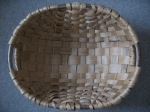
swill1A swill is one of the most pleasing objects one could wish to possess.  It is a thing, complete and contained in itself, needing no explanation or props,  assured and possessed of a simple confidence – being both useful and beautiful.  As Ruskin said: ‘Nothing can be beautiful which is not true’ and a swill basket whispers “true” in a very lovely and understated way.

It is made from thin strips of woven oak and, so, is light and strong.  The closeness of the weave means that it is suitable for holding even very fine material. On the farm, these versatile baskets could be used for harvesting potatoes yet also for sowing seed. They were also used to carry coal or bobbins and, today, our family uses them as laundry baskets and, when there’s a baby, as a cradle.

The South Lakes was once a great centre for swill basket making. Bulmer’s Directory of Furness and Cartmel of 1910 showed a total of 13 swill-making shops in the area and, in Broughton, the focus of this industry was a cluster of buildings behind Cinder Hill, down by the park.

Today, there is just one man in the country who makes his living out of swill baskets. His name is Owen Jones and he lives at High Nibthwaite close to Coniston Water.  He was taught in 1988 by a retired ‘Swiller’ from Broughton called John Barker.  Owen runs workshops from his house and travels around the country attending fairs where you can see him making swills.  He has no trouble selling everything he makes.  If you would like further information about Owen and his work, click HERE for his own website.

There’s a swill in Sykehouse Cottage.  It is usually left on the stairs windowsill for guests to admire and use – if you’ve got any washing to hang out.  Carry your basket with one hand, the rim resting nicely on your hip bone.


Wallowbarrow Round Walk

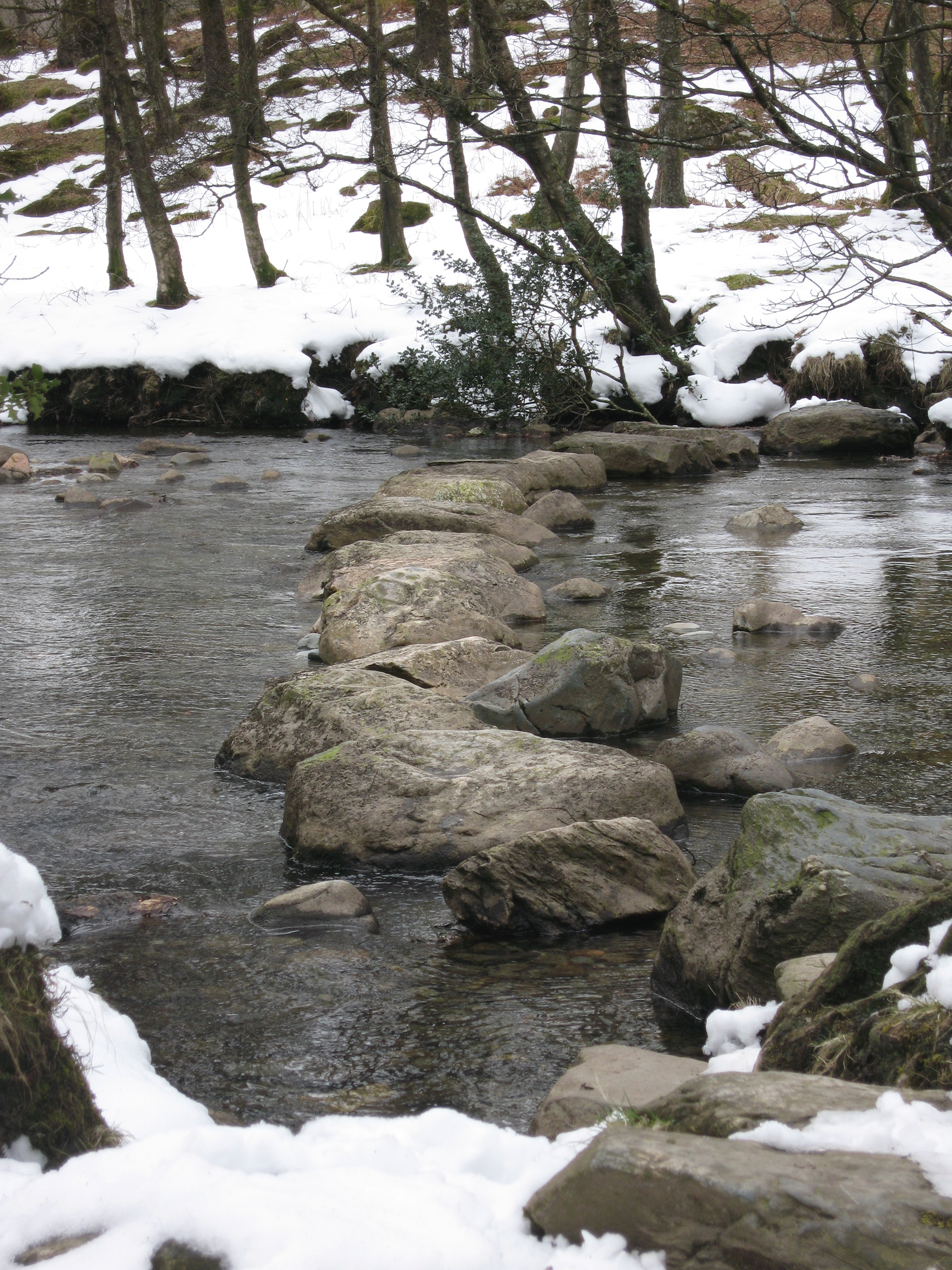
Stepping Stones across the DuddonAt Easter, we tramped through the snow around Wallowbarrow.  This is one of our very favourite walks: a beautiful, quiet river and woodland walk along the Duddon in National Trust land.   It can be as long or as short as you want and has the added bonus of starting/ending at the wonderful Newfield Inn.

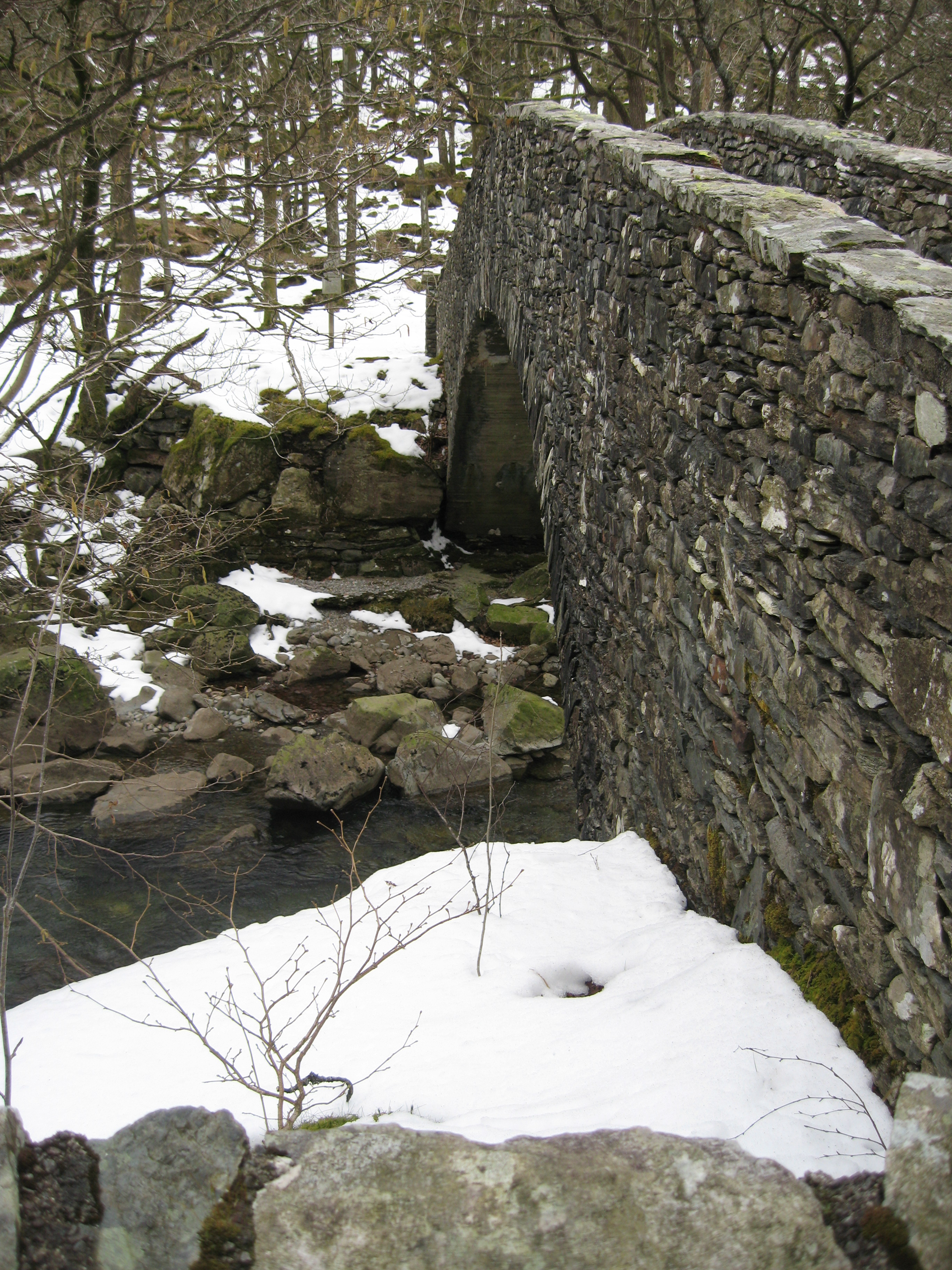
In the Summer, we often picnic on a river beach and sometimes even take a dip at Watersmeet where the Tarn Beck meets the river Duddon.  But today we were just grateful that someone had been around before us to tamp down the snow – which in places was higher than our wellies!Memorial Bridge

CawWe wandered about for an hour and finished with lunch at the Newfield.  Run by Paul, this c17th inn at Seathwaite has great, hearty food for walkers, a log fire and a fine selection of local beer.  This lunchtime we ate their famous steak pie and Cumberland sausage and sampled Barngates’ Catnap and Cumberland’s Corby Ale.  Click here for their website.


1 Comment

Donald Campbell : A Very Small Personal Encounter

Donald Campbell

Bill was in the Sun Hotel, Coniston, with his Granny in late December 1966 when he met Donald Campbell who was practising for his final, and unfortunately fatal, water speed record attempt on Coniston Water.

As a very small boy, Bill vividly remembers Campbell surrounded by friends in the hotel’s corridor, bending down to ask him : “Do you like cars?”  Bill said, “No.”  “Do you like boats?” “No.”  “Do you like chocolate?”  “Yes!”  This raised a big laugh from Campbell and his friends, and the man gave him a Mars bar – a huge prize for a small boy with such an unyielding attitude!

Coniston is only 9 miles and 15 minutes drive away from Sykehouse Cottage.  The Ruskin Museum in Yewdale Road has a new wing with many interesting photographs and displays of memorabilia about the Campbell family, the Bluebird and the Record Attempt.

If you want to read my post about the Ruskin Museum, click here.  Alternatively the link to the Museum’s quirky website for opening times and more information is here.