Sykehouse Cottage

A beautiful C17th Holiday Cottage in the Lake District


Townend: A Quiet Jewel

townendTownend : A Quiet Jewel.

East of Windermere is an historical treasure that we have a special interest in – for it was built around about the same time as Sykehouse Cottage.  It’s attached to no famous name and therefore doesn’t attract the crowds – like that other farm on the west of the Lake, Hill Top, does – but for a delightful insight into 400 years of Lakeland life, Townsend is perfect.  The Browne family was an ordinary farming family but their home at Troutbeck is a beautiful evocation of a past life and well worth a detour to visit.  The place is crammed full of quirky household objects from c17th onwards.  There are excellent, informative guided tours and often they put on an afternoon of cooking where they recreate some of the recipes from the Brownes’ family recipe books.

Townend is a National Trust property and is open from March to October.  It’s about 20 miles from the Cottage and for further details on opening times and prices, follow this link.


Sticky Toffee Pudding

sticky toffee pudding

Recently a guest asked me for some foodie day trip suggestions – and I immediately thought of Cartmel, a half hour’s drive away from Sykehouse cottage.  The village has the famous L’Enclume restaurant run by Simon Rogan (Lunch £45 and Dinner £120)  with  its sister brasserie, Rogan & Co.  And now his empire has extended to the local pub, The Pig & Whistle.  It also has a very beautiful priory to wander around.

But I bet most people visit Cartmel for the PUDDING.

Cartmel Village Shop started baking Sticky Toffee puddings in their back kitchen about 20 years ago. They have now moved to a bigger kitchen but it’s still handmade and there’s still nothing to match it for rounding off a Sunday lunch.  If you don’t have a chance to visit, their puddings are sold at the local grocers, Melville Tyson,  in Broughton-in-Furness.  Look out for their distinctive pale blue packs in the chiller cabinets.

And rather wonderfully, they also do mail order from their website here.


Jo McGrath : Tails of Cumbria

jo mcgrath guineapigLocal Broughton artist, McGrath, is having her first solo exhibition at Brantwood starting 11 January and going on until  9 March 2014.  Focusing on farm animals, her lively and affectionate style really brings out the character of her subjects and it is wonderful that she has landed this exhibition which hopefully will bring her wider recognition.

For guests at Sykehouse Cottage, her work can also be seen, and is for sale, at the Broughton Village Bakery.  (Look out for team Riggs’ favourite sketch of a Guinea Pig.)

For further information about Jo’s work. Please click on the link to her website or the Brantwood exhibition go to their website here.


Birk’s Bridge to the Newfield Inn

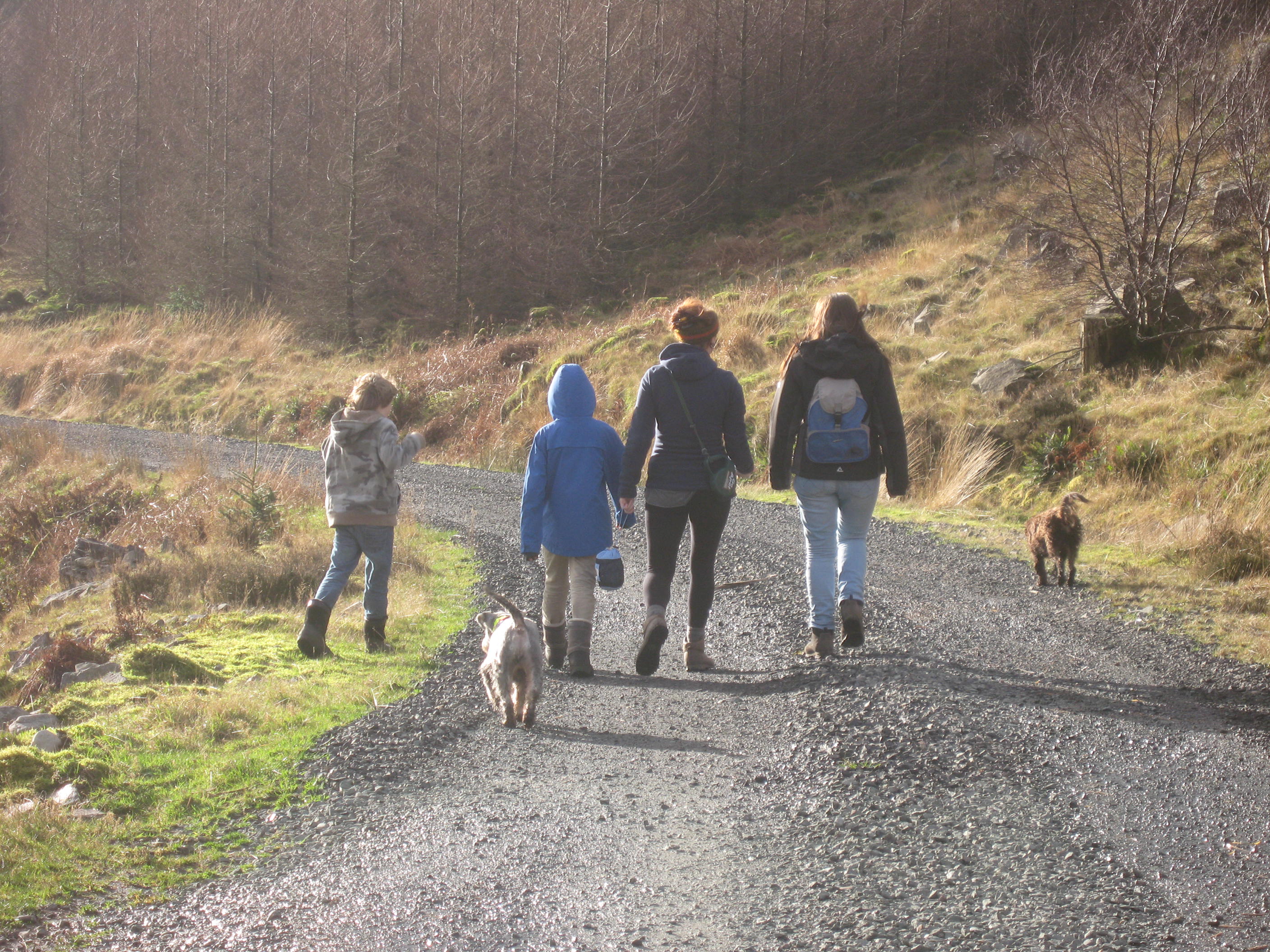
Hard Knott We started at the NT car park just above the beautiful Hobbit-like Birk’s Bridge and headed into the forestry land, marked on the OS map as Dunnerdale Forest and by the Forestry Signs as Hardknott Forest.  Much of the wood that was described by Wainwright as “young plantations” has now been cleared and neatly stacked up making for a rather beautiful, if working, landscape.  The Commission is now replanting the forest as a mixed deciduous rather than the stark fir crop to reflect the changing purposes of these fells. 

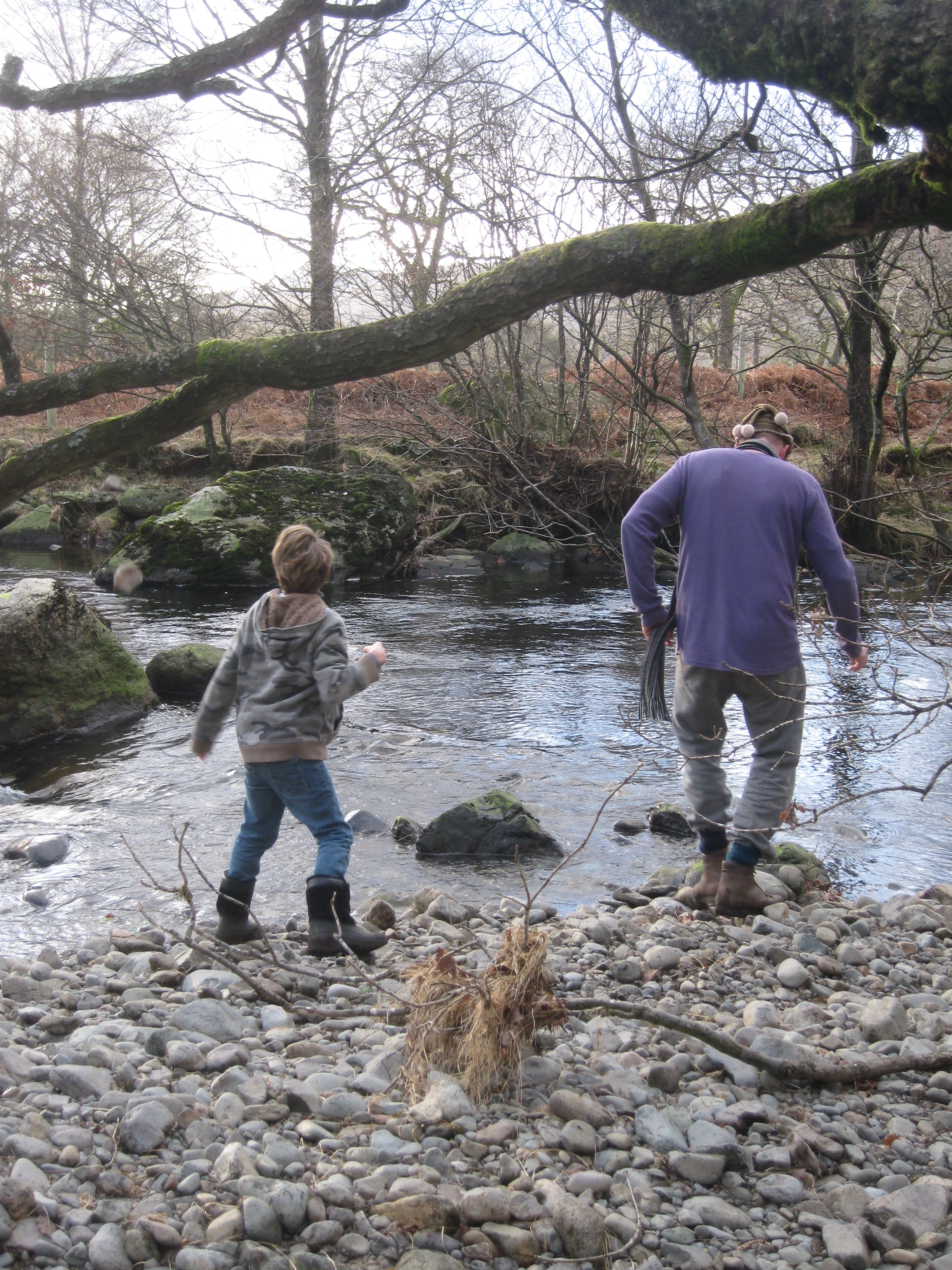
We used the level forestry roads rather than the narrower public footpaths as they are lovely for chatting whilst walking.  IMG_8561Good progress was made across the forest to Grassguards Farm with its little concreted ford.  Here we picked up the Grassguards Gill bridleway down into the beautiful gnarled trees and river walks around Wallowbarrow.   Here, we took the opportunity to lob some rather large stones in the river before retiring to the Newfield for half pints of CatNap and something-and-chips. WallowBarrow

The walk took one hour 40 minutes and we were helped by another member of the family was waiting to provide a lift to retrieve cars rather than having to walk back after a rather heavy meal!


Norman Nicholson: “a unique and unjustly overlooked Cumbrian”.

norman nicholsonThis January marks the 100th anniversary of Norman Nicholson’s birth in Millom and BBC is marking the occasion with a half hour radio programme presented by fellow Cumbrian, Eric Robson, on Sunday 5th January.  The Corporation’s press release describes him as “the unique and unjustly overlooked Cumbrian” and I guess a short radio documentary might help raise his profile a little – though calling the programme “Provincial Pleasures” is, I feel, damning the man with faint praise as “Provincial” was a phrase he fought against all his life.

Nicholson was championed by TS Eliot, Ted Hughes and Seamus Heaney though he remains little known because he chose to stay in the little town of Millom than move south.  On the western edges of the Lake District, in this desolate, post-industrial landscape, Nicholson wrote a lovely meditative poem about his craft and about his middle name (which was also his mother’s maiden name) “Cornthwaite”:  “… I lop, / Chop and bill-hook at thickets and rankness of speech, / Straining to let light in, make space for a word, / To hack out once again my inherited thwaite / And sow my peck of poems, not much of a crop.”

This poem was first published in “Sea to the West”, 1984 and can be found in Collected Poems. pp.354

To learn more about him, you can visit the Norman Nicholson Society’s website.  The link is here.

© The Trustees of the Estate of Norman Nicholson, by permission of David Higham Associates Limited


Wainwright’s Pictorial Guides: “all the little trees on this map”.

IMG_8255The charm of these guides undoubtedly lies in Wainwright’s personal touch with painstakingly detailed heather covered fells and minute contour lines; carefully annotated compass view points; and multiple approaches to each summit.  But amongst all this obsessive detail, Wainwright does relax every so often and the hard work is leavened by a joke or two such as: “TAKE CARE DO NOT START FIRE and so waste the effort spent in drawing all the little trees on this map.  The Forestry Commission, too, will be annoyed.”

Wainwright’s sketch of the Summit of Coniston Old Man includes details and descriptions of  “Tourists looking for Blackpool Tower”, a regimented line of Boy Scouts and “a Solitary fell walker, bless him, looking north to the hills.”

We hope you will find your own favourite vignettes whilst planning your walks!

For further information about Alfred Wainwright, please follow this link to the Wainwright Society.


Wainwright’s Fourth Volume: “Heaven fallen upon the earth”

IMG_8252In the Personal Notes at the end of his Fourth Volume on the Southern Fells, Wainwright noted that “there had been a clamour for Book Four ever since the first in the series appeared” because these fells “just happen to be a bit of heaven fallen upon the earth.”

This orange striped volume is the one we use the most and it is dedicated to: “the hardiest of all fell walkers, The Sheep of Lakeland, the truest lovers of the mountains, their natural homes and providers of their food and shelter” … and, sheep like, the chapters scramble up and down the thirty fells of the Southern Lakes from Scafell Pike to Holme Fell.  He includes the direct route to Coniston Old Man: “this is the way the crowds go”; plus the one via Boo Tarn: “a climb for … the discerning walker” and one ascent from Torver with its view of Dow Crag, “one of the grandest rock-faces in the district”.

We hope you enjoy planning your walks!

For further information about Alfred Wainwright, please follow this link to the Wainwright Society.


Wainwright’s Pictorial Guides: fireside companions.

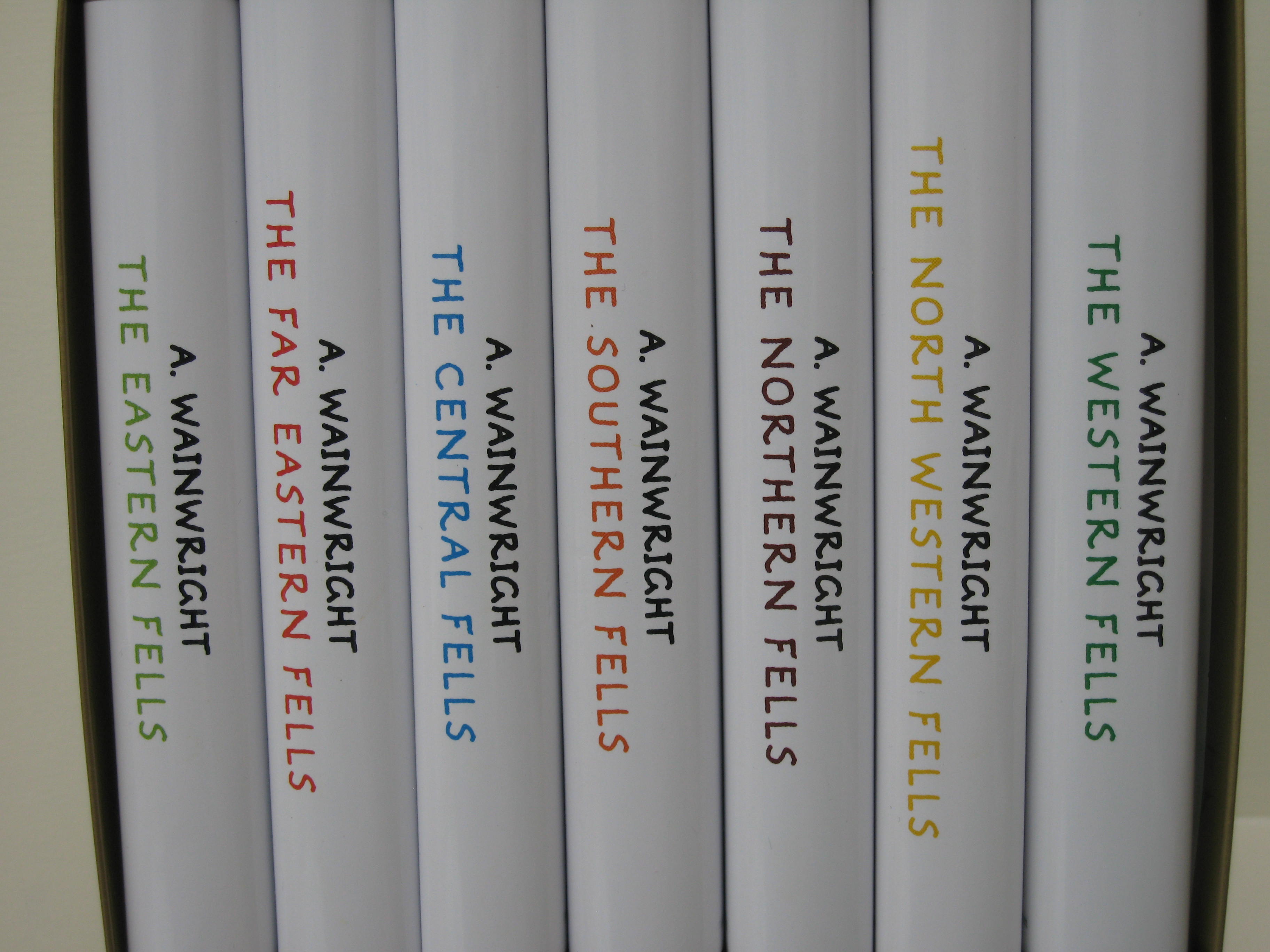
WainwrightIn Sykehouse Cottage there is a complete set of the 50th anniversary edition of Wainwright’s Pictorial Guides to the Lakeland Fells. These seven little hardback books contain the most magical evocation of fell walking I have ever encountered. Each of the seven volumes is dedicated to a different group of people or animal: map makers, dogs, solitary wanderers and each book has a personal note at the end. And this warm and idiomatic approach to the fells is continued throughout the books which are hand drawn – and handwritten (!) – guides to walking the fells.
The walks are catalogued with a wonderful combination of description and maps, complete with contour lines, tussocks of grass and little trees and personal observation. Poring over these little black and white drawings and humorous asides draws you from your armchair into the vast green fells of your imagination and makes you want to jump into this Lilliputian world of Wainwright and bestride the fells like Gulliver. As Wainwright himself puts it: “this book has been written, carefully and with infinite patience, for my own pleasure and because it has seemed to bring the hills to my own fireside.”
We hope you enjoy planning your walks!
For further information about Alfred Wainwright, please follow this link to the Wainwright Society.


Muncaster Castle – a family run experience …

Muncaster CastleAfter enduring many “experiences” of an expensive and very themed nature in days out with the Rigg tribe, a trip to Muncaster Castle is always a delight. There are no expensive photo opportunities to catch the unwary, nor an exit-through-big-gift-shop policy.  The castle has a charmingly individualistic audio tour written and read by the family which makes a refreshing change from an actor reading from carefully nuanced script.

They highlight family favourites: “I always point out the ships’ anchors and the date 1588 on the fireback!” barks the owner.  “Never forget the Armada lost some ships on this coast!”

Family losers:“This portrait is of the one we call the Drip.” “Here’s a family portrait and can you see how two of the sons’ heads are pasted in? They must have been the ones he wasn’t talking to.”

And apologies for not opening more rooms on account of the mess: “Sorry, you’re not allowed into my dressing room. We all need a door to throw our pyjamas behind!”.

I only paraphrase slightly.

Muncaster Castle is an truly original day out and 12 only miles from Sykehouse Cottage.  It would be a shame to miss it if you are in the area.


Silecroft Beach in the High Winds

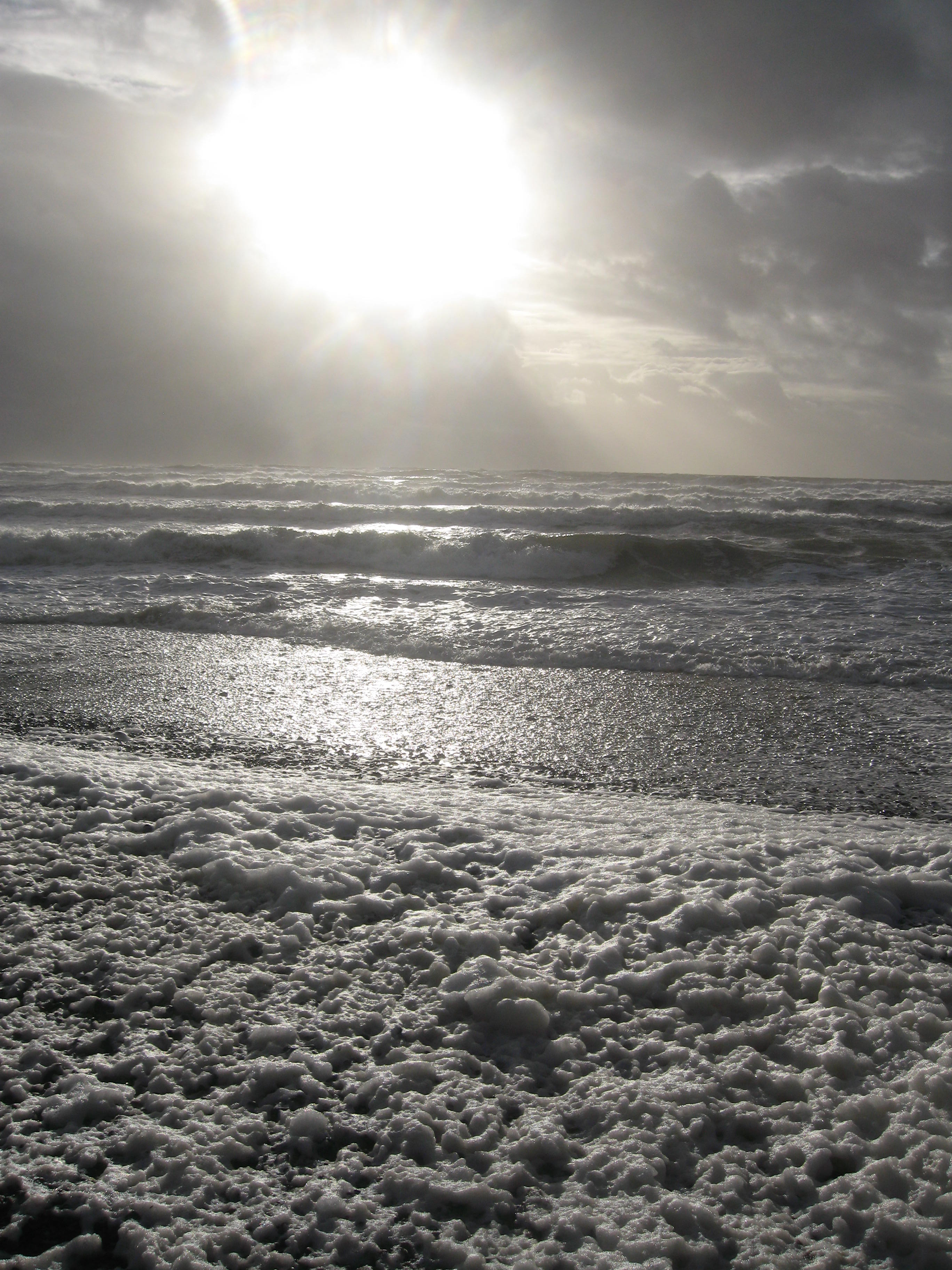
In the high winds of October this year, team Rigg all drove down to the beach at Silecroft.  This long stretch of pebbly beach is a favourite of ours: an excellent spot for a “blow” with the children.  There are never many people here just a couple of stalwart fisherman with high rods planted in the stones and their long lines stretched into the waves.

This trip was particularly exciting as we fought against the blustery winds and stepped through the foam which was flying across the beach from the sea.

Only 8 miles away from Sykehouse Cottage, it has a car park and stone steps leading down to the shore.  No café but there’s sometimes an ice cream van parked up in the Summer.IMG_8282